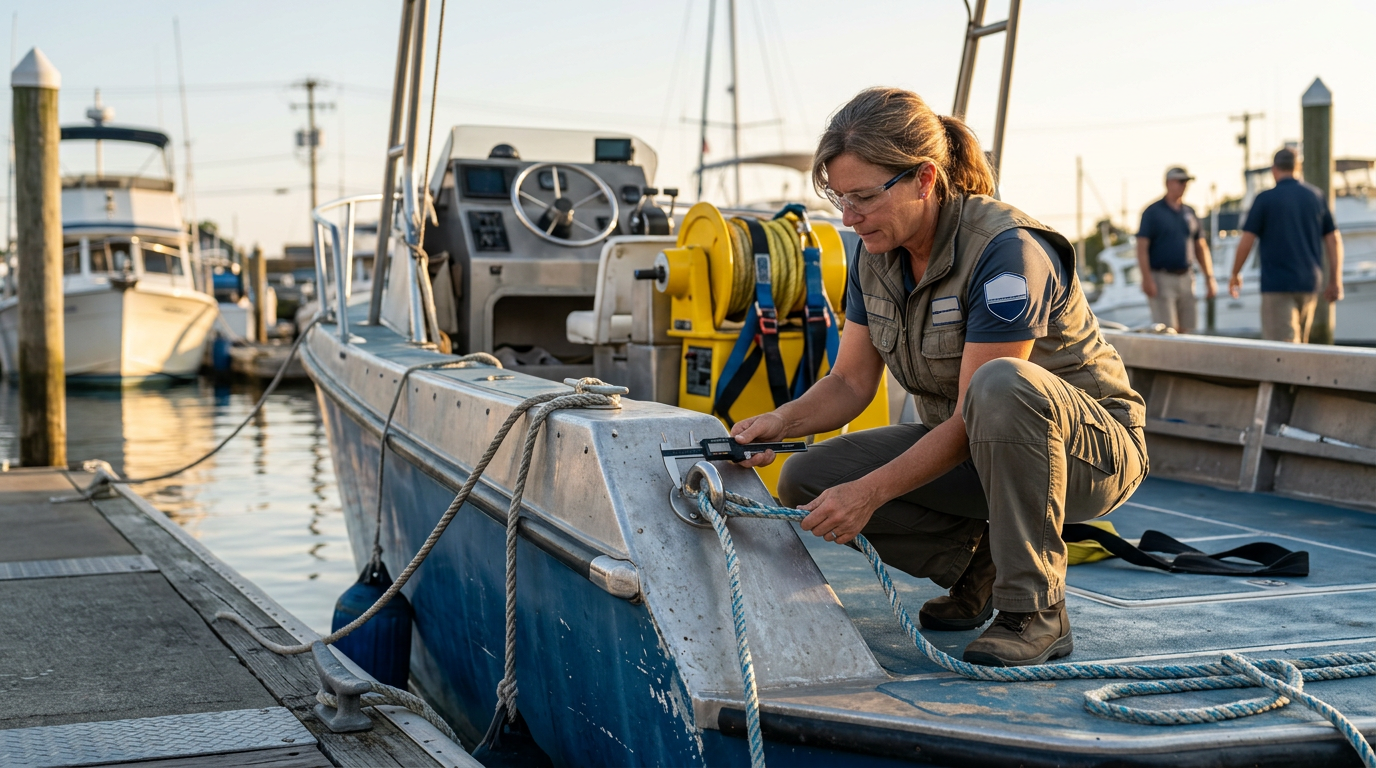
The Used Parasail Boat Inspection Checklist
A gleaming, preowned parasail boat can seem like a shortcut to profitability, but a bargain price can quickly evaporate into a sea of unforeseen repairs…
A gleaming, pre-owned parasail boat can seem like a shortcut to profitability, but a bargain price can quickly evaporate into a sea of unforeseen repairs and dangerous liabilities. To differentiate a solid investment from a floating money pit, a comprehensive used parasail boat inspection checklist is your most valuable tool. This guide provides a systematic approach for operators to verify a vessel's condition before any money changes hands.
Pre-Inspection: Paperwork and Documentation
Before you even step aboard, a thorough document review can uncover deal-breaking issues. Insist on seeing the original versions or certified copies of the following:
- Vessel Title and Registration: Verify the Hull Identification Number (HIN) on the paperwork matches the HIN permanently affixed to the boat's transom. Ensure there are no outstanding liens.
- USCG Certificate of Inspection (COI): For any vessel carrying more than six passengers for hire, a valid COI is non-negotiable. Check the expiration date, passenger count, and any operational restrictions. Note that a COI is tied to the vessel and its ownership/operational structure, and its transfer is not automatic.
- Maintenance Logs: A well-maintained commercial vessel will have detailed service records. Look for regular engine oil changes, transmission service, winch maintenance, and records of major repairs. No logs is a major red flag.
- Engine and Winch Manuals: These are essential for future servicing and troubleshooting.
On-Site Inspection: Hull and Structural Integrity
The hull is the boat’s foundation. A commercial parasail boat endures significantly more stress than a recreational vessel, making this inspection critical. Bring a good flashlight, a small hammer, and a moisture meter if possible.
Below the Waterline
- Gelcoat and Paint: Look for extensive cracking, a web of fine "crazing," or large chips. Tap the hull gently with the hammer; a dull thud can indicate delamination, while a sharp rap suggests solid fiberglass.
- Blisters: Osmotic blisters look like pimples in the gelcoat. A few small ones may be cosmetic, but numerous or large blisters point to serious water intrusion into the laminate.
- Thru-Hulls: Inspect all thru-hull fittings. They should be solid, sealed, and have functioning seacocks. Bronze or high-quality stainless steel is preferred. Check for corrosion, especially the green staining indicative of failing bronze.
- Running Gear: Examine the propeller(s) for dings, cracks, or warping. Grab the prop shaft and try to move it side to side; excessive play indicates a worn cutless bearing, a common wear item. Check the rudder and struts for any signs of impact or bending.
Above the Waterline & Deck
- Rub Rail: Is it securely fastened, or is it pulling away from the hull? Gaps can allow water intrusion. Look for signs of major impacts.
- Stress Cracks: Pay close attention to high-stress areas: the transom corners, the point where the flight tower mounts to the deck, and around cleats and U-bolts. Radiating cracks are a bad sign.
- Deck and Non-Skid: The deck should feel solid underfoot everywhere. Soft spots indicate core rot. Check the condition of the non-skid surface; a worn deck is a safety hazard for crew and passengers.
- Hatches and Seating: Open and close all hatches. Do they seal properly? Are the hinges and latches corroded? Check all passenger seating for secure mounting, rips in the upholstery, and mold/mildew underneath cushions.
Parasail-Specific Systems
These are the specialized, high-wear components that define the boat. Their failure is not just expensive—it's catastrophic.
The Winch System
The hydraulic winch is the heart of the operation. Whether it's a Waterbird, CWS, or custom-built system, the inspection points are similar.
- Hydraulic Lines and Fluid: Look for any leaking fluid around fittings, hoses, or the winch motor itself. Hoses should be free of cracks and chafing. Check the hydraulic fluid reservoir; it should be full and the fluid should be clean, not milky (water contamination) or burnt-smelling.
- Winch Drum and Level-Wind: The drum should be smooth. A grooved or damaged drum will destroy a towline quickly. Verify the level-wind mechanism travels smoothly back and forth, ensuring the line spools evenly.
- Brake and Controls: The winch brake is a critical safety feature. While a static test is limited, ensure the control levers engage positively. The controls at the helm and any remote stations should be responsive.
- Towline: Inspect the entire visible length of the towline for frays, UV degradation, and flat spots. A worn line must be replaced immediately, so factor that into your cost.
Flight Tower and Platform
- Welds and Mounts: Meticulously inspect every weld on the tower for cracks. Pay special attention to the base where it bolts to the stringers or deck. Check all bolts for tightness and corrosion. Any corrosion bleed around a stainless fastener indicates a potential problem.
- Launch/Landing Platform: This area takes a beating. Check the condition of the padding or non-skid. Ensure it provides a secure, safe surface for the flight crew.
Propulsion & Mechanical Systems Check
A reliable engine is paramount. Parasail boats require high-torque power plants, with inboard diesels being the industry standard for their durability and fuel efficiency.
Engine Types: What to Look For
Here is a breakdown of common power options and their specific inspection points:
Inboard Diesel (e.g., Yanmar, Volvo Penta, Cummins)
- Hours: "High hours" on a well-maintained commercial diesel are different than on a gas engine. Under 3,000 hours is low, 3,000-7,000 is mid-life, and 7,000+ requires scrutiny of major service records (rebuilds, new turbos, etc.).
- Cold Start: Watch for excessive white (water/steam) or blue (oil) smoke on a cold start.
- Fluids: Check the oil for a milky appearance (head gasket issue) and the coolant for an oily sheen.
- Belts, Hoses, and Mounts: Squeeze hoses to check for softness. Inspect belts for cracks. Look for rust stains around engine mounts, a sign of failure.
- Turbocharger: Look for any oil residue on the compressor housing.
Inboard Gas (e.g., Mercury Horizon, Crusader)
- Hours: Life expectancy is much lower than diesel. Over 1,500-2,000 hours is considered very high.
- Exhaust Manifolds/Risers: These are a major failure point. They are raw-water cooled and corrode from the inside out. Ask when they were last replaced (typically a 5-7 year service item in saltwater).
- Ignition System: Check for corrosion on spark plug wires, distributor cap, and coil.
Outboard (e.g., Yamaha, Mercury - Less common on dedicated boats but seen on conversions)
- Hours: A similar life expectancy to inboard gas engines.
- Corrosion: Tilt the engine up and inspect the mounting brackets and power trim unit for corrosion.
- Lower Unit: Check the gear lube for a milky color, which indicates a failed seal.
Sea Trial: The Ultimate Test
Never buy a boat without a thorough sea trial. This is where you verify what your eyes saw on the trailer.
- Performance: Run the boat at Wide Open Throttle (WOT). Does it reach the manufacturer's specified RPM range? Monitor the engine temperature and oil pressure gauges.
- Handling: Perform several tight turns in both directions. The boat should handle predictably without excessive cavitation or bogging down.
- Vibration: Feel for any unusual vibration through the deck or helm. This could indicate a bent prop shaft, engine misalignment, or a fouled propeller.
- Winch Operation (Simulated): If possible and safe, pay out and retrieve a significant length of line. The winch should operate smoothly under load without hesitation or strange noises.
- Systems Check: While underway, turn on everything: bilge pumps, washdown pump, navigation lights, stereo. Ensure they all function correctly.
Frequently Asked Questions
Q: Can the USCG Certificate of Inspection (COI) be easily transferred to me? A: No, a COI transfer is not automatic. The USCG must approve the new owner/operator through a formal process which may require a new inspection. You must consult with your local USCG Marine Safety Office before purchasing to understand the exact requirements for the vessel you're considering.
Q: What are considered "high engine hours" for a commercial parasail boat? A: It depends heavily on the engine type and maintenance history. For a workhorse diesel like a Yanmar or Cummins, 5,000-7,000 hours with meticulous maintenance might still have plenty of life. For a gasoline engine, anything over 1,500 hours warrants a very close look and likely a compression test.
Q: Should I hire a professional marine surveyor? A: Absolutely. Even with this checklist, a qualified surveyor specializing in commercial small passenger vessels has the tools (like moisture meters, engine diagnostic software) and experience to spot issues you might miss. The cost of a survey (typically $25-$35 per foot) is a tiny fraction of the potential cost of a hidden structural or mechanical failure.
Q: What is a realistic price range for a used parasail boat? A: Prices vary widely based on age, condition, and brand (e.g., a late-model Centurion or Ocean Pro Marine 31/33 will command a premium). Expect to see prices from $80,000 for an older but functional vessel to over $200,000 for a low-hour, late-model boat.
Bottom Line
Buying a used parasail boat is a major business decision that demands extreme diligence. This inspection checklist is your starting point, not the finish line. Combine it with a professional survey and a comprehensive sea trial to ensure your new asset is ready to safely and profitably fly passengers, not sink your business with unexpected costs and downtime.
Was this helpful?
Written by
Editorial Team
Related articles
Best Parasailing Boats for Beginners in 2025
Selecting your first vessel is the most consequential step in launching a commercial parasailing operation, directly impacting your safety, efficiency,…
Buying Your First Parasail Boat: A 2025 Guide
Taking the helm as an owneroperator after years as a hired captain is a landmark achievement in the commercial watersports industry. The single most imp…
How Much Does a Parasailing Boat Cost? Complete Price Guide
Determining the true parasailing boat cost is the most significant financial calculation for any commercial watersports operator. More than just a vesse…