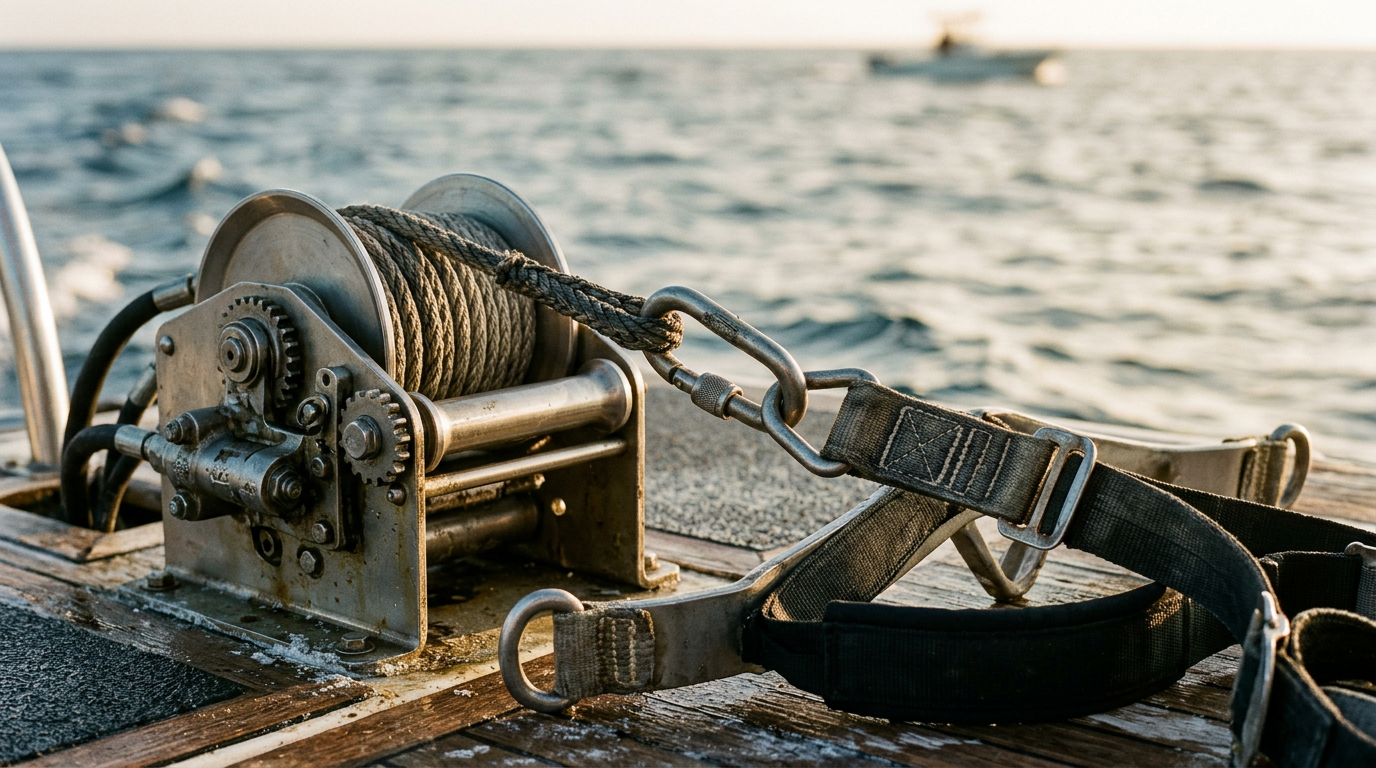
Harnesses & Yoke Bars: The Essentials
Of all the hightech equipment on a modern parasail boat, from the powerful Yamaha or Mercury engines to the hydraulic winch system, none is more persona…
Of all the high-tech equipment on a modern parasail boat, from the powerful Yamaha or Mercury engines to the hydraulic winch system, none is more personal than the passenger's connection to the canopy. The parasail harness and yoke bar system is the only thing physically securing your clients hundreds of feet in the air. Its integrity is not just a matter of compliance or comfort; it's the absolute foundation of a safe flight.
The Anatomy of a Safe Flight Connection
Understanding the components of the harness and yoke assembly is the first step toward effective inspection and maintenance. While designs vary slightly between manufacturers like Waterbird, Custom Chutes Inc. (CCI), and Commercial Water Sports (CWS), the core elements are universal.
The Harness
The modern parasail harness is a "sit-in" or "swing" style design, a far cry from the crude straps of decades past. It’s engineered to comfortably support passengers in a seated position, distributing their weight evenly for a secure and enjoyable ride.
- Webbing: The primary material is high-tensile, multi-stitched nylon webbing. This webbing forms the leg loops, waist belt, and shoulder straps that secure the passenger. High-wear areas are often reinforced with durable Cordura fabric.
- Stitching: Look for robust, box-and-cross stitching patterns, especially where straps connect to each other or to hardware. This is done with heavy-duty thread designed to withstand shock loads and harsh marine environments.
- Buckles and Adjusters: Most harnesses use a combination of stainless steel or high-strength polymer adjusters and buckles. The goal is to allow for a snug, customized fit for a wide range of passenger sizes while ensuring the straps cannot slip under load.
The Yoke Bar (Spreader Bar)
The yoke bar, often called a spreader bar, attaches to the harness and serves two critical functions. First, it keeps the harness from uncomfortably squeezing the passenger. Second, it provides a single, robust attachment point that connects to the parasail's riser lines. These bars are typically made from heavy-gauge 316L stainless steel for maximum corrosion resistance and strength, then padded with dense foam and covered in a durable vinyl coating for passenger comfort and protection.
Harness Sizing and Selection
A one-size-fits-all approach is a recipe for disaster. Using the correct size harness is crucial for passenger safety. A harness that is too large can allow a smaller passenger to slip out, while one that is too small will be uncomfortable and may create unsafe pressure points.
Most professional operations carry a range of harness sizes to safely accommodate everyone from a small child to a large adult.
Common Harness Sizing and Configurations:
| Harness Size | Typical Passenger Weight | Key Features & Use Case |
|---|---|---|
| X-Small / Child | 30 - 90 lbs | Specially designed with higher attachment points and smaller leg loops to prevent children from slipping through. Must be used with close adult supervision or in tandem flights. |
| Small | 90 - 140 lbs | A common size for smaller adults and teenagers. Features a full range of adjustability for a snug fit. |
| Medium / Universal | 120 - 220 lbs | The workhorse of most operations. Highly adjustable and fits the majority of adult passengers. |
| Large / X-Large | 220 - 300+ lbs | Built with longer straps and a wider seat to comfortably and securely fit larger passengers. |
| Tandem / Triple | N/A | These are not harnesses, but specialized, wider yoke bars that allow for the connection of two or three separate harnesses for multi-passenger flights. They feature multiple, independent attachment points. |
Always follow manufacturer guidelines for weight limits on both harnesses and yoke bars. When fitting a passenger, ensure all straps are snug—you should be able to fit no more than two fingers between the strap and the passenger. The leg straps are especially important; they must be tightened securely in the passenger's groin area to prevent them from "submarining" or sliding down in the harness.
The Daily Inspection Ritual
The Professional Association of Parasail Operators (PAPO) and the Water Sports Industry Association (WSIA) both mandate rigorous equipment inspections. Your harnesses and yokes must be inspected visually before every single flight and more thoroughly at the start of each day.
Pre-Flight "Eyeball" Inspection
As the crew helps a passenger into the harness, they should be performing a quick, tactile check:
- Run hands over the webbing, feeling for nicks, cuts, or fraying.
- Check that buckles click securely into place.
- Ensure the yoke bar is properly attached to the harness D-rings.
- Visually confirm the yoke bar's attachment carabiner is locked before connecting to the flight line.
Daily "Full" Inspection Checklist
Before the first flight of the day, every harness and yoke bar that might be used should undergo a detailed inspection. Use a logbook to track the condition of each numbered piece of equipment.
Webbing and Stitching:
- UV Degradation: Look for significant color fading. Bright red webbing that has faded to light pink is a major red flag for UV damage. The webbing will feel stiff and may make a crackling sound when flexed.
- Fraying & Abrasions: Pay close attention to areas that rub against hardware or the boat deck. Any webbing that is cut or frayed by more than 10-15% of its width should be retired immediately.
- Stitching: Check all load-bearing stitch patterns (the "X" in a box). Look for any broken, pulled, or abraded threads.
Hardware Inspection:
- Buckles: Check for cracks, deformation, or severe corrosion. Plastic buckles can become brittle over time. Ensure the release mechanism is clean and functions correctly.
- D-Rings and Adjusters: Examine for cracks, distortion, or deep scoring. Any metal hardware that is bent or showing signs of cracking must be retired.
- Yoke Bar: Inspect the stainless steel bar itself, especially at the welds where the attachment points connect to the main bar. Look for any signs of cracking or rust bleeding from the welds. Check the integrity of the padding and cover.
Maintenance, Cleaning, and Storage
Proper care can significantly extend the safe, usable life of your equipment. The marine environment is relentless, and salt is the primary enemy of your soft goods.
- Rinse Daily: At the end of each day, thoroughly rinse all harnesses and yokes with fresh water to remove all salt deposits. Salt crystals are abrasive and will slowly saw through the nylon fibers.
- Deep Clean Periodically: As needed, wash harnesses in a large tub with a mild, non-detergent soap (like Woolite). Never use bleach, solvents, or harsh chemical cleaners, as they will degrade the nylon webbing.
- Dry Completely: Hang harnesses to air dry completely, but never in direct sunlight. UV radiation is the single biggest factor in shortening the lifespan of webbing. A shaded, well-ventilated area is ideal.
- Store Properly: Store clean, dry harnesses by hanging them in a cool, dark, and dry room. Avoid piling them in a damp dock box where mold and mildew can grow, further weakening the fabric.
Knowing When to Retire Your Gear
Harnesses and yokes are sacrificial equipment; they have a finite lifespan. Using gear past its retirement date is a gamble no professional operator should ever take.
The widely accepted industry standard, supported by bodies like WSIA, is to retire harnesses after 500 to 750 flight hours or two years of service, whichever comes first. However, this is a guideline. A harness used in a high-volume, sun-intensive location like the Florida Keys may need to be retired sooner than one used in a shorter, milder season up north.
Retire any harness or yoke bar IMMEDIATELY if it displays:
- Significant UV damage (major fading, stiffness).
- Any cuts, nicks, or fraying in the webbing.
- Broken or pulled stitching in a load-bearing area.
- Cracked, bent, or severely corroded hardware.
- "When in doubt, throw it out." The cost of a new harness (typically $300-$500) is infinitesimal compared to the cost of an accident.
Frequently Asked Questions
Can I repair a damaged parasail harness?
No. Field repairs to load-bearing webbing or stitching are strictly forbidden. You cannot replicate the strength of factory-grade bar tacking. If webbing or stitching is compromised, the harness must be retired and replaced. Minor hardware, like a non-load-bearing plastic keeper, might be replaceable, but consult the manufacturer first.
How often should I truly replace my harnesses?
Follow the manufacturer's recommendation and the industry standard of 500-750 hours or two years, whichever comes first. However, your daily inspection is the ultimate guide. If a one-year-old harness shows significant wear and tear or UV damage, retire it early. Always prioritize condition over age.
What is the most common point of failure?
Besides catastrophic accidents, the most common failure points are due to gradual degradation. This includes UV damage weakening the webbing to a critical point, or abrasion slowly "sawing" through a strap, often hidden from a casual glance. This is why thorough, tactile inspections are so critical.
Are all tandem and triple bars the same?
No. While they serve the same function, their design, width, and weight ratings differ. A triple bar is wider than a tandem bar to provide adequate separation for three passengers. Never exceed the passenger or weight limit designated for a specific yoke bar. Always use a bar from a reputable parasail equipment manufacturer.
Bottom Line
The harness and yoke bar system is the most critical piece of safety equipment your passengers will ever interact with. It demands unwavering respect. By implementing a rigorous schedule of inspection, cleaning, and timely retirement, you uphold your professional duty and ensure that every flight is built on a foundation of absolute security. This diligence isn't just good practice—it's the core of a safe, reputable, and successful parasailing operation.
Was this helpful?
Written by
Editorial Team
Related articles
Hydraulic Winch Systems Explained
While the engine provides the power and the hull provides the platform, the heart of any modern commercial parasail operation is its hydraulic winch sys…
Parasail Canopy Types: A Practical Comparison
Selecting the right equipment is the bedrock of a safe and profitable parasail operation, and few choices are as consequential as your parasail canopy t…
Parasailing Boat Engine Requirements: HP, Brands & Costs
The right parasailing boat engine is the muscular, beating heart of your entire operation, directly impacting safety, reliability, and profitability. Wh…