Hydraulic Winch Systems Explained
While the engine provides the power and the hull provides the platform, the heart of any modern commercial parasail operation is its hydraulic winch sys…
While the engine provides the power and the hull provides the platform, the heart of any modern commercial parasail operation is its hydraulic winch system. This critical piece of machinery is responsible for the smooth, controlled, and safe deployment and retrieval of flyers, directly impacting customer experience and operational safety. Understanding its components, function, and maintenance is not just beneficial—it's essential for any professional in this industry.
How a Parasail Hydraulic Winch System Works
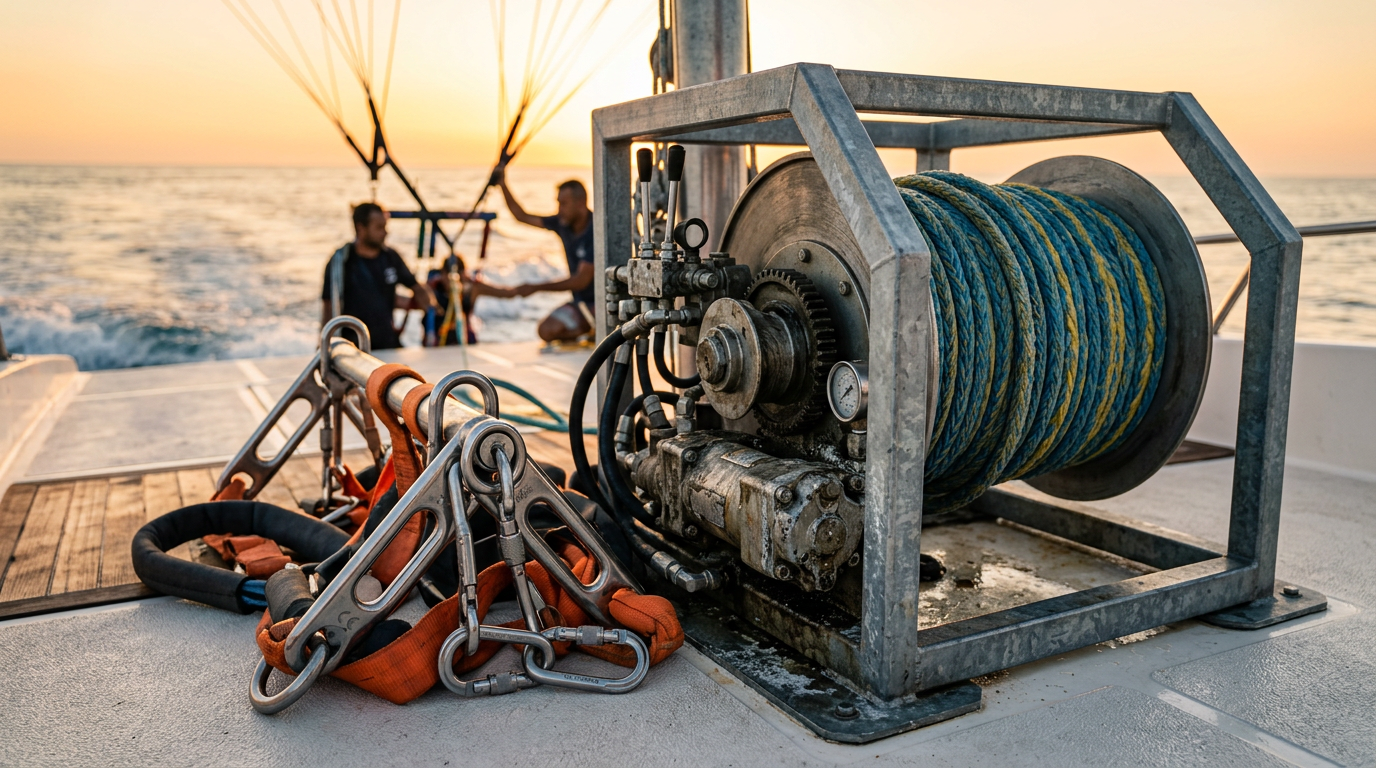
At its core, a parasail winch is a purpose-built machine designed to pay out and retrieve a towline under significant and variable load. Unlike a simple spool or capstan, a hydraulic system offers unparalleled control over speed and torque. This allows a trained captain to smoothly launch flyers into the air, hold a steady line length during the flight, and gently retrieve them back to the boat's flight deck, even in changing wind conditions.
The system's power originates from the boat's main engine. A Power Take-Off (PTO) unit, typically bolted to the engine's transmission, drives a hydraulic pump. This pump pressurizes hydraulic fluid, which is then directed through a series of hoses and control valves to a hydraulic motor. This motor provides the rotational force that turns the winch drum, winding or unwinding the parasail towline. The result is a seamless transfer of power from the main engine into precisely controlled pulling force.
Core Components and Their Functions
A professional-grade hydraulic winch system is more than just a drum and a motor. It's a collection of integrated components, each with a vital role.
- Hydraulic Pump: Usually a gear or piston pump, this component is the system's power source. Driven by the engine's PTO, it draws hydraulic fluid from a reservoir and pressurizes it, creating the flow needed to operate the motor.
- Winch Drum: This is the large spool that holds the towline. Modern drums are typically constructed from marine-grade aluminum to save weight and resist corrosion. They are engineered to hold 600 to 1,200 feet of 3/8" or 1/2" double-braid polyester towline without deforming under load.
- Hydraulic Motor: Attached to the winch drum, this motor converts the fluid pressure from the pump into the mechanical, rotational energy that turns the drum. The operator's control inputs directly regulate the flow of fluid to this motor, dictating the speed and direction of the drum's rotation.
- Level Wind Assembly: This is a crucial safety and longevity component. As the drum spins, a guided mechanism (the level wind) travels back and forth across its width, ensuring the towline lays evenly on the drum. This prevents the line from "bunching up," which can cause dangerous jams, shock-loading, and premature line wear.
- Control Valves and Operator Levers: This is the human interface. Located at the helm, a set of levers allows the captain to precisely control the winch. One lever typically controls direction (pay-out or retrieve), while another controls the speed by "feathering" the flow of hydraulic fluid. Sophisticated systems from manufacturers like Waterbird Marine feature single-lever joystick controls for intuitive operation.
- Hydraulic Reservoir and Cooler: The system holds several gallons of hydraulic fluid in a dedicated tank or reservoir. Because the fluid heats up significantly under the constant load of back-to-back flights, a hydraulic cooler is essential. This device, similar to a small radiator, uses raw water to dissipate heat and maintain the fluid's optimal viscosity and performance.
Selecting a Winch System: Key Factors
Choosing a new winch or evaluating an existing one involves more than just looking at the price tag. Leading systems from manufacturers like CWS (Commercial Water Sports) and Waterbird Marine share common traits of quality and reliability. When specified in a new build from yards like Ocean Pro Marine, the winch is often the centerpiece of the boat's design.
Essential Features Checklist
| Feature | Importance | What to Look For |
|---|---|---|
| Material & Construction | High | Marine-grade (6061-T6) aluminum construction for the drum and frame. Anodized or powder-coated finishes for corrosion resistance. Stainless steel hardware is a must. |
| Pulling Power (Torque) | High | The system must be able to retrieve multiple flyers in strong winds without straining. Look for systems matched to the vessel's engine (e.g., Yanmar, Volvo Penta, or high-horsepower outboards like Yamaha or Mercury). |
| Line Speed & Control | High | A fast retrieval speed reduces flight turnaround time, but smooth, variable control is paramount for safety. The ability to feather the controls smoothly from a dead stop to full speed is non-negotiable. |
| Integrated Safety Systems | Critical | This includes a robust level wind, pressure relief valves to prevent over-pressurization, and an easily accessible emergency stop (E-stop) an operator can hit to instantly halt all winch movement. |
| Engine Integration | Critical | The winch's hydraulic pump and PTO must be professionally matched and installed to the boat's engine. A mismatch can lead to poor performance and damage to a very expensive diesel inboard or outboard. |
| Manufacturer Support | High | In a commercial operation, downtime is lost revenue. Choose a manufacturer with a strong reputation, readily available spare parts, and good technical support. |
Typical costs for a complete, new hydraulic winch system, including the PTO and installation, can range from $20,000 to over $35,000, depending on the boat, engine type, and specific features.
Critical Maintenance Procedures
A hydraulic winch system is a workhorse, but it requires diligent maintenance to remain safe and reliable. Neglect is the number one cause of premature failure.
- Daily Checks: Before the first flight of the day, the captain or crew should perform a visual inspection. Check the hydraulic fluid level in the reservoir. Look for any drips or leaks around hoses and fittings. Start the engine and engage the winch briefly, listening for any unusual grinding or whining sounds.
- Fluid & Filter Changes: Hydraulic fluid is the lifeblood of the system. It not only transfers power but also lubricates and cools components. Following the manufacturer's recommended service interval for changing the fluid and hydraulic filter is mandatory. Contaminated fluid is the fastest way to destroy a pump or motor.
- Hose Inspection: Regularly inspect all hydraulic hoses for signs of chafing, cracking, blistering, or weeping at the fittings. A high-pressure hydraulic leak is not just a mess; it's extremely dangerous. Fluid can be injected under the skin, causing severe injury. Replace any suspect hoses immediately.
- Mechanical Inspection: On a weekly or bi-weekly basis, inspect the winch drum, frame, and level wind mechanism for any signs of cracking, bending, or loose bolts. Ensure the level wind guide moves freely and its rollers or guides are not worn out.
Frequently Asked Questions
What is the difference between a direct-drive and a planetary winch? A direct-drive winch, the most common type in modern parasailing, has the hydraulic motor coupled directly to the winch drum. It's simple, reliable, and offers excellent speed control. A planetary winch uses a set of planetary gears between the motor and the drum to multiply torque. While they can offer more pulling power in a smaller package, they are more complex and less common in today's purpose-built parasail boats.
Can I install a hydraulic winch system on any boat? No. A proper parasail winch installation requires a vessel designed for the task. The hull needs structural reinforcement to handle the immense pulling forces. Most importantly, the engine must be compatible with a Power Take-Off (PTO) unit, which most standard recreational engines are not. Purpose-built parasail boats from manufacturers like Centurion or Ocean Pro Marine are designed from the keel up to integrate these systems.
What is the most common point of failure on a winch system? Excluding towline failure, the most common equipment failure points are hydraulic hoses and contaminated fluid. Hoses are wear items exposed to sun, salt, and vibration. Fluid becomes contaminated from dirt ingress or internal component wear, which then accelerates wear on the entire system. Diligent maintenance prevents both of these issues.
What are WSIA and PAPO standards regarding winches? The Watersports Industry Association (WSIA) and the Professional Association of Parasail Operators (PAPO) are key bodies that set operational and equipment standards. While they don't certify specific winch brands, their standards mandate features like a functional level-wind system and require that operators follow manufacturer maintenance schedules to ensure the equipment is in safe working order.
Bottom Line
The hydraulic winch system is the operational core of a professional parasail business. Its smooth power delivery and reliability are directly tied to safety, customer satisfaction, and profitability. By selecting a high-quality system, operating it correctly, and adhering to a strict maintenance schedule, operators can protect their most valuable on-board asset and ensure years of safe, efficient flights.
Was this helpful?
Written by
Editorial Team
Related articles
Parasail Canopy Types: A Practical Comparison
Selecting the right equipment is the bedrock of a safe and profitable parasail operation, and few choices are as consequential as your parasail canopy t…
Harnesses & Yoke Bars: The Essentials
Of all the hightech equipment on a modern parasail boat, from the powerful Yamaha or Mercury engines to the hydraulic winch system, none is more persona…
Parasailing Boat Engine Requirements: HP, Brands & Costs
The right parasailing boat engine is the muscular, beating heart of your entire operation, directly impacting safety, reliability, and profitability. Wh…