How Much Does a Parasailing Boat Cost? Complete Price Guide
Determining the true parasailing boat cost is the most significant financial calculation for any commercial watersports operator. More than just a vesse…
Determining the true parasailing boat cost is the most significant financial calculation for any commercial watersports operator. More than just a vessel, this purpose-built machine is the core of your business, and understanding its full price tag—from initial purchase to long-term operation—is paramount for profitability and safety. The final number goes far beyond the initial listing price, encompassing a wide range of essential factors.
New Parasailing Boat Costs: The Sticker Price
For a brand new, turn-key parasailing boat from a leading manufacturer, operators should budget between $175,000 and $275,000+. This price range reflects a vessel that is ready for commercial operation upon delivery. The industry leaders for these specialized boats in the U.S. market are primarily Commercial Water Sports (CWS) with their popular CWS 31' and 34' Ocean Pro models, and Custom Chutes Inc. (though less common for new builds today).
This turn-key price typically includes:
- The purpose-built fiberglass hull, often between 31 and 35 feet.
- A powerful inboard diesel engine.
- A complete hydraulic winch and line launching system.
- A flight deck, seating for 12-15 passengers, and a protective canopy.
- Basic USCG-required safety equipment.
The final cost within this range is heavily influenced by your chosen specifications. An upgrade from a standard 480hp Yanmar diesel to a higher-output 550hp Cummins or Volvo Penta engine will significantly increase the price. Likewise, opting for a larger hull, premium sound systems, custom gelcoat colors, or advanced navigation packages will push the total toward the higher end of the spectrum.
Used Parasailing Boat Costs: A Viable Alternative?
The used market offers a more accessible entry point, with prices for operational parasailing boats typically ranging from $70,000 to $160,000. This is an attractive option for new ventures with limited startup capital or for established operators looking to expand their fleet economically.
However, the lower initial investment comes with significant caveats and due diligence requirements. The price of a used vessel depends on several critical factors:
- Age and Hours: The boat's model year and, more importantly, the number of hours on the engine and winch system are primary price drivers. An engine with 6,000 hours is nearing the end of its typical service life before a major rebuild is required.
- Engine Type and Condition: A well-maintained diesel engine from a reputable brand holds its value far better than a neglected one. A full service history is invaluable.
- Winch System Condition: The winch is a highly specialized piece of machinery. Inspect for hydraulic leaks, line wear, and proper function. A full winch rebuild can cost over $15,000.
- USCG Certification Status: If the boat operates as an inspected vessel, its Certificate of Inspection (COI) must be current. Bringing an expired COI up to date can be an expensive and time-consuming process involving potential structural, mechanical, and safety system upgrades.
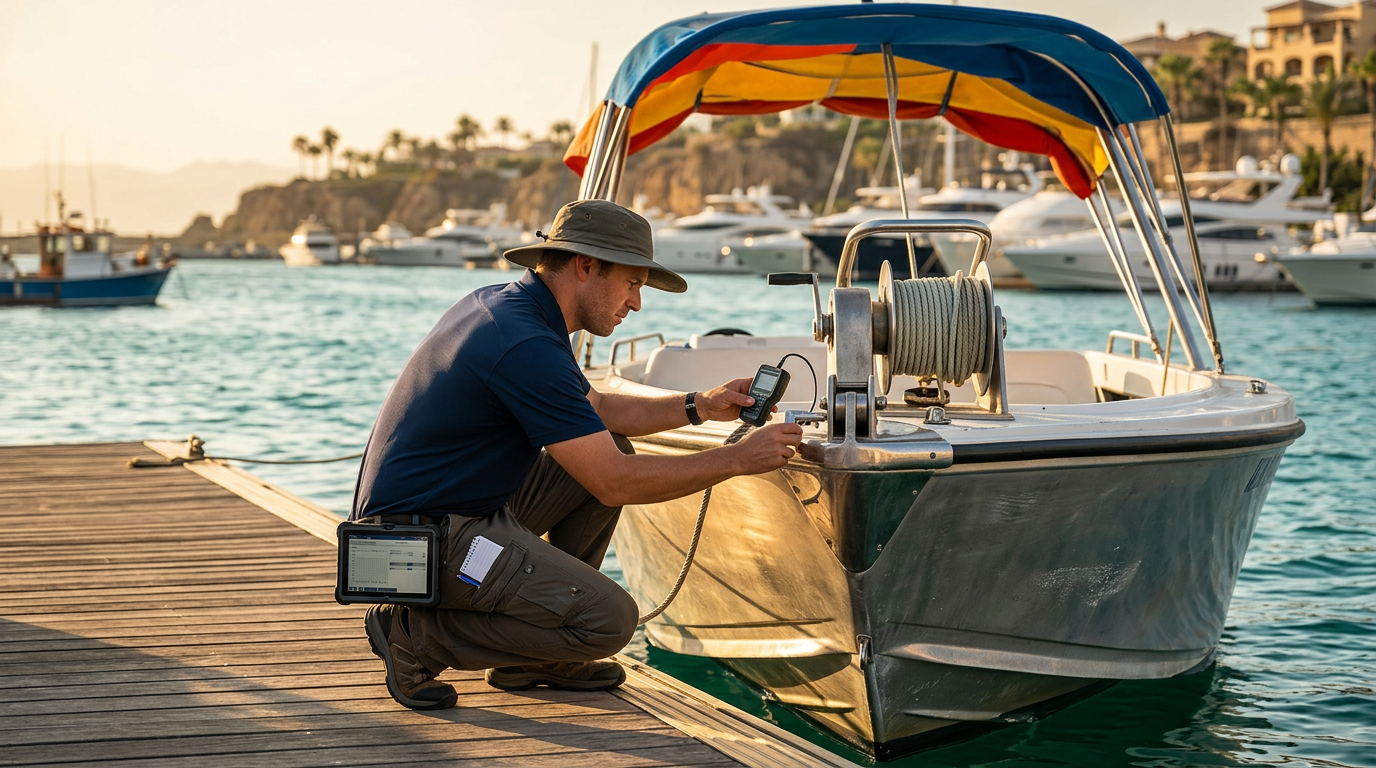
Before purchasing any used parasail boat, a comprehensive marine survey by a surveyor experienced with commercial passenger vessels is non-negotiable. It is the single best way to uncover hidden issues that could quickly erase any initial savings.
Comparison: New vs. Used Parasailing Boats
| Factor | New Boat | Used Boat |
|---|---|---|
| Initial Cost | High ($175k - $275k+) | Moderate ($70k - $160k) |
| Depreciation | Highest in first 2-3 years | Slower, more gradual |
| Maintenance | Lower, predictable | Higher, potential for major unexpected repairs |
| Reliability | Very high, backed by manufacturer | Variable, dependent on history and upkeep |
| Warranty | Comprehensive manufacturer warranty | Typically sold "as-is," no warranty |
| Technology | Modern engine tech, winch safety features | May have outdated or less efficient systems |
| Certification | Built to current USCG standards | May require costly upgrades to meet standards |
Beyond the Hull: Factoring in the Full Cost
The purchase price is only the beginning. A realistic budget must account for numerous other expenses required to get your boat on the water and keep it running safely and profitably.
The Powertrain: Engine and Propulsion
Diesel power is the undisputed standard in the parasailing industry. The high torque of diesel engines is essential for getting a fully loaded boat on plane and handling the significant drag of a parachute.
- Standard Engines: Yanmar, Cummins, and Volvo Penta are the most common and trusted brands, with horsepower ratings typically falling between 380hp and 550hp.
- Longevity & Cost: While more expensive upfront than gasoline engines, diesels offer superior fuel economy, durability, and a longer service life, often running for 5,000-8,000 hours before needing a major overhaul.
- Repower Costs: If you buy a used boat needing a new engine, a complete diesel repower project can cost anywhere from $40,000 to $70,000, including the engine, components, and labor.
Essential Operations & Safety Equipment
While a new boat comes with basics, you'll still need to budget for a full suite of operational gear. These costs must be factored into any used boat purchase.
- Parasails (Chutes): You'll need a minimum of 3-4 chutes of varying sizes to accommodate different wind conditions. Expect to pay $2,500 - $4,000 per chute.
- Harnesses & Gear: Multiple harnesses, tandem bars, and life vests are required. Budget $3,000 - $5,000 for a complete initial set.
- Winch Line: The parasail line is a critical wear item and must be replaced regularly per manufacturer and WSIA/PAPO guidelines. A new 600-foot line costs $500 - $800.
- Branding: A professional vinyl boat wrap with your company's branding can cost $4,000 - $8,000.
- Electronics: While a basic VHF and GPS may be included, you may want to upgrade to a larger multi-function display (MFD) for advanced chart plotting and engine monitoring.
Recurring Annual Costs
These are the ongoing expenses that are part of the cost of ownership year after year.
- Insurance: This is a major expense. A comprehensive commercial marine policy including P&I (Protection & Indemnity) and Hull coverage can range from $12,000 to $30,000+ per year, depending on your location, claims history, and coverage limits.
- Dockage/Slip Fees: Marina costs vary dramatically by region. Budget $6,000 to $20,000 annually ($500 - $1,700+ per month) for a slip in a desirable tourist location.
- Routine Maintenance: Plan on spending at least $5,000 - $10,000 per year on routine maintenance, including engine oil and filter changes, fuel system service, zinc replacement, bottom cleaning, and winch system upkeep.
Frequently Asked Questions
How long does a commercial parasail boat last?
The fiberglass hull of a well-maintained boat can easily last 20 years or more. However, the key components have a finite service life. Expect to rebuild or replace a diesel engine every 5,000-8,000 operating hours. The hydraulic winch system may require an overhaul every 3-5 years, depending on use and maintenance.
What kind of captain's license is needed for a parasail boat?
At a minimum, the operator must hold a USCG Master Captain's License. The specific tonnage rating (e.g., 25, 50, or 100-ton) required depends on the size and designation of the vessel. For boats carrying more than six passengers (which includes all standard parasail boats), the vessel must undergo a rigorous USCG inspection process to receive a Certificate of Inspection (COI). Operating such a vessel also requires the captain to be enrolled in a random drug testing program.
What are the top brands for new parasailing boats in the US?
Commercial Water Sports (CWS), building the Ocean Pro line of boats, is the dominant manufacturer in the United States. Their boats are known for their reliability, purpose-built design, and integrated hydraulic winch systems.
Is it better to buy a new or used parasail boat for my first operation?
This depends on your risk tolerance, mechanical aptitude, and access to capital. A new boat offers a warranty, the latest safety features, and maximum reliability, which means less downtime and more revenue in your crucial first years. A used boat can save significant money upfront but carries the risk of expensive, unforeseen repairs that can sideline your business. If you choose used, a thorough survey and a healthy maintenance budget are essential.
Bottom Line
The cost of a parasailing boat is far more than its purchase price. A new, turn-key vessel represents an investment of over $200,000, while a used boat still requires a substantial commitment plus a contingency for repairs. By budgeting for the complete picture—including equipment, insurance, dockage, and maintenance—you can accurately forecast the true financial requirements and build a solid foundation for a safe, compliant, and profitable parasailing operation.
Was this helpful?
Written by
Editorial Team
Related articles
Best Parasailing Boats for Beginners in 2025
Selecting your first vessel is the most consequential step in launching a commercial parasailing operation, directly impacting your safety, efficiency,…
Buying Your First Parasail Boat: A 2025 Guide
Taking the helm as an owneroperator after years as a hired captain is a landmark achievement in the commercial watersports industry. The single most imp…
The Used Parasail Boat Inspection Checklist
A gleaming, preowned parasail boat can seem like a shortcut to profitability, but a bargain price can quickly evaporate into a sea of unforeseen repairs…