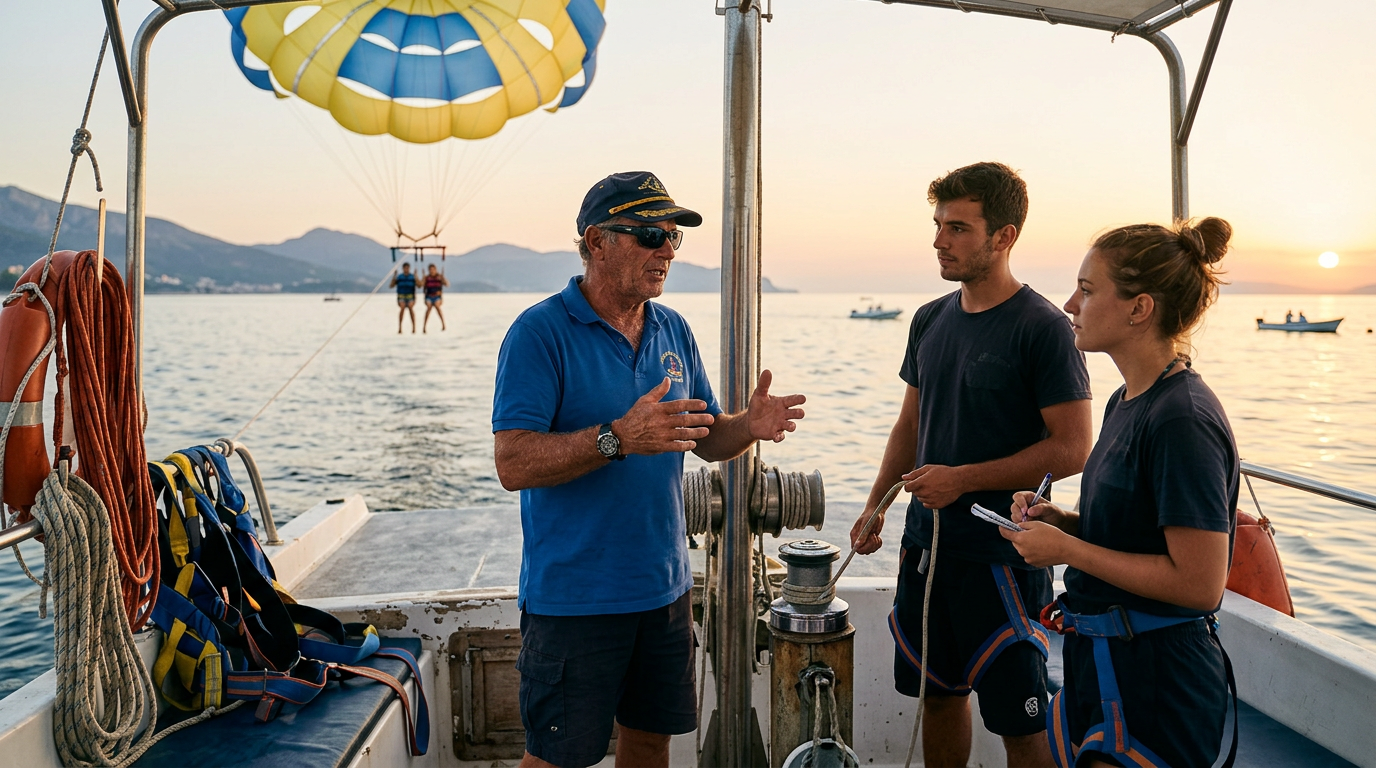
How to Become a Parasail Captain
For many, the pinnacle of a day on the water is soaring under a colorful canopy, thousands of feet of line spooling out behind a powerful boat. But for…
For many, the pinnacle of a day on the water is soaring under a colorful canopy, thousands of feet of line spooling out behind a powerful boat. But for a select few, the real challenge and reward lie at the helm. If you're wondering how to become a parasail captain, know that the path demands far more than just a love for the ocean; it requires a deep commitment to safety, rigorous training, and an unshakeable command of both vessel and crew.
Becoming a parasail captain is a journey from novice deckhand to a licensed, insured, and highly skilled professional. This isn't just about driving a boat—it's about becoming the ultimate authority on safety for every passenger who steps aboard your vessel. It's a career that blends the technical skills of a mariner with the customer service acumen of a tour guide and the sharp vigilance of a meteorologist. The journey is demanding, but for the right individual, it's one of the most rewarding jobs on the water.
The Unwavering Foundation: Your USCG Captain's License
Before you even think about spooling out a towline, you must secure the proper credentials from the United States Coast Guard (USCG). This is the absolute, non-negotiable first step. For commercial parasailing, two license paths are common, but only one is truly the industry standard.
OUPV "6-Pack" License
The Operator of Uninspected Passenger Vessels (OUPV), commonly called a "6-Pack," allows the holder to carry up to six paying passengers on an uninspected vessel. While this is a valid license for small charters, it's highly limiting for a professional parasail operation, as most purpose-built parasail boats are designed to carry up to 12 or even 15 passengers plus crew. Starting with an OUPV is possible, but you will quickly need to upgrade.
Master Captain's License
This is the goal. A Master license, rated for 25, 50, or 100 Gross Tons, is the professional standard. It allows you to operate both inspected and uninspected vessels and carry the number of passengers the vessel is certified for. Nearly all commercial parasail operators require their captains to hold a Master license.
Requirements for a Master Near Coastal License typically include:
- Sea Time: A minimum of 360 days of documented experience on a vessel. At least 90 of those days must be within the last three years. For a Near Coastal license (the most common for this work), at least 90 days must have been on near coastal or ocean waters.
- Age: You must be at least 19 years old.
- Physical Examination: A comprehensive physical completed by a licensed physician within the last 12 months.
- Drug Test: A drug test from a qualified facility dated within the last 6 months.
- First Aid/CPR: A current certification from the American Red Cross or another USCG-approved provider.
- Examination: Passing a multi-module exam covering Rules of the Road, Navigation, Deck General, and more.
USCG License Comparison for Aspiring Captains
| Feature | OUPV (6-Pack) | Master 25/50/100-Ton |
|---|---|---|
| Passenger Limit | Up to 6 passengers for hire | Up to the vessel's certified limit (often 12+) |
| Vessel Type | Uninspected Passenger Vessels Only | Inspected & Uninspected Vessels |
| Typical Sea Time | 360 days | 360 days for 25/50-Ton; 720 days for 100-Ton |
| Common Use | Small fishing charters, water taxis | Parasail boats, ferries, tour boats |
| Industry Standard? | A possible starting point, but limiting. | The professional standard for parasailing. |
Earning Your Stripes: From Deckhand to Helm
A license is just a piece of paper. True competence is forged through hundreds of hours of hands-on experience. No reputable operator will hand the keys to a $200,000+ CWS or Ocean Pro vessel to a newly licensed captain with no specific parasail experience. The path is a practical apprenticeship.
- Start as a Deckhand: Your journey begins on the flight deck, not at the helm. As a deckhand (or "mate"), you'll be responsible for the core functions of the operation: rigging harnesses, managing the flight line, instructing passengers, and ensuring their safety and comfort. This is where you learn the rhythm of the work.
- Learn the Equipment: You will become intimately familiar with every piece of gear: the different sizes of canopies and their wind limits, the condition of the harnesses, the integrity of the carabiners and risers, and most importantly, the operation of the hydraulic winch system.
- Read the Environment: A great captain's primary skill is observation. As a deckhand, you'll learn from your captain how to read the wind on the water, spot developing squalls, understand current and tide, and make crucial "go" or "no-go" decisions.
- Log Your Sea Time: Every day you work on the boat, even as a deckhand, counts toward your required sea time. Keep a detailed log and have it signed by the captain or owner. This documented time is your ticket to sitting for your USCG exams.
Specialized Training: The Industry Standard of Care
While a USCG Master license makes you a legal boat captain, it doesn't teach you the specific art and science of parasailing. For that, you turn to industry organizations that set the standard for safety and operations.
The Water Sports Industry Association (WSIA) is the leading authority. The WSIA Parasail Operator Certification is a comprehensive program that is a de facto requirement for captains working for reputable, insured companies. This training goes beyond basic boating and covers critical topics:
- Advanced Weather Analysis: Understanding microclimates and making real-time decisions based on gusts and changing conditions.
- Risk Management: Identifying and mitigating potential hazards before they become incidents.
- Equipment Procedures: In-depth knowledge of winch operation, line inspection schedules, and canopy care.
- Emergency Drills: Practicing emergency retrieval procedures, including water landings and dealing with mechanical failures.
Insurance underwriters for commercial parasail operations almost universally require captains and crew to have completed this type of industry-specific training. It demonstrates a commitment to a professional standard of care that goes above and beyond basic licensing.
Mastering the Tools of the Trade
A professional parasail captain must be an expert on their specific platform. Modern parasail boats are highly specialized machines, not your average center console.
The Vessel: Purpose-built boats from manufacturers like CWS (Commercial Water Sports) and Ocean Pro Marine dominate the U.S. market. A boat like an Ocean Pro 31 or CWS 33 is a common sight. Key features include:
- An integrated flight deck at the stern.
- A powerful, direct-drive hydraulic winch system.
- Seating for 12 or more passengers.
- A single diesel inboard engine, typically from Volvo Penta or Yanmar, ranging from 370hp to over 550hp. Diesel is favored for its immense torque, which is essential for maintaining steady boat speed during flight, even in choppy seas.
The Equipment: The captain is ultimately responsible for all equipment on board. This includes not just knowing how it works, but when it needs to be inspected, serviced, or retired. This means understanding winch maintenance schedules, the UV degradation rate of towlines, and the proper inspection process for chute stitching and suspension lines.
Frequently Asked questions
How much do parasail captains make?
Compensation varies significantly based on location, season length, and experience. In seasonal tourist areas like the Florida Keys, Hawaii, or the Outer Banks, an experienced captain can expect to earn between $50,000 and $75,000+, including tips. Entry-level or first-year captains might start closer to the $40,000 range for a full season.
How long does it take to become a parasail captain?
Starting from zero experience, the entire process typically takes two to four years (or seasons). This includes accumulating the necessary 360+ days of sea time as a deckhand, studying for and passing the Master license exam, and gaining enough hands-on, parasail-specific experience for an owner to trust you at the helm.
What is the hardest part of being a parasail captain?
Without question, the most challenging part of the job is weather-related decision-making. The pressure to fly on marginal days can be high, but a professional captain's primary responsibility is safety. Making the conservative "no-go" call and disappointing expectant customers is a difficult but essential part of the job.
Do I need to be a mechanic to be a captain?
While you don't need to be a certified diesel mechanic, you absolutely must have a strong working knowledge of your vessel's systems. This includes daily engine checks (oil, coolant, belts), understanding the hydraulic winch system, and being able to troubleshoot minor issues at sea to ensure a safe return to port.
Bottom Line
The path to becoming a parasail captain is a marathon, not a sprint. It starts with a foundational USCG Master license, is built upon thousands of hours of practical experience as a deckhand, and is polished with industry-specific certifications from bodies like the WSIA. It's a career that demands constant vigilance, a humble respect for the weather, and an unwavering commitment to the safety of every person who puts their trust in you. For those who can meet these demands, it offers a corner office with an unparalleled view.
Was this helpful?
Written by
Editorial Team
Related articles
Top Parasail Training Schools in the US
Earning a USCG Captain's License is a monumental achievement, but it's only the first step for anyone serious about entering the commercial parasailing…
Crew Training Best Practices
In the highstakes world of parasailing, the difference between a flawless flight and a critical incident often comes down to one factor: crew training.…