Top Parasail Training Schools in the US
Earning a USCG Captain's License is a monumental achievement, but it's only the first step for anyone serious about entering the commercial parasailing…
Earning a USCG Captain's License is a monumental achievement, but it's only the first step for anyone serious about entering the commercial parasailing industry. The unique demands of flying passengers hundreds of feet above the water require specialized knowledge that goes far beyond standard vessel operation, making attendance at dedicated parasail training schools a non-negotiable part of professional development. These programs are where captains learn the critical, parasail-specific skills that ensure safety, compliance, and operational excellence.
Beyond the 6-Pack: Why Specialized Parasail Training is Essential
A USCG OUPV (6-Pack) or Master Captain's License demonstrates proficiency in navigation, rules of the road, and general vessel management. It does not, however, cover the nuanced and high-risk aspects of parasailing. Insurance underwriters and state regulators (like Florida's) recognize this gap, making certification from a reputable program a de facto requirement to operate legally and affordably.
Specialized training addresses core competencies unique to the parasailing world:
- Advanced Weather Assessment: Learning to read micro-weather patterns, understand wind shear at altitude, and make go/no-go decisions based on more than just a basic forecast.
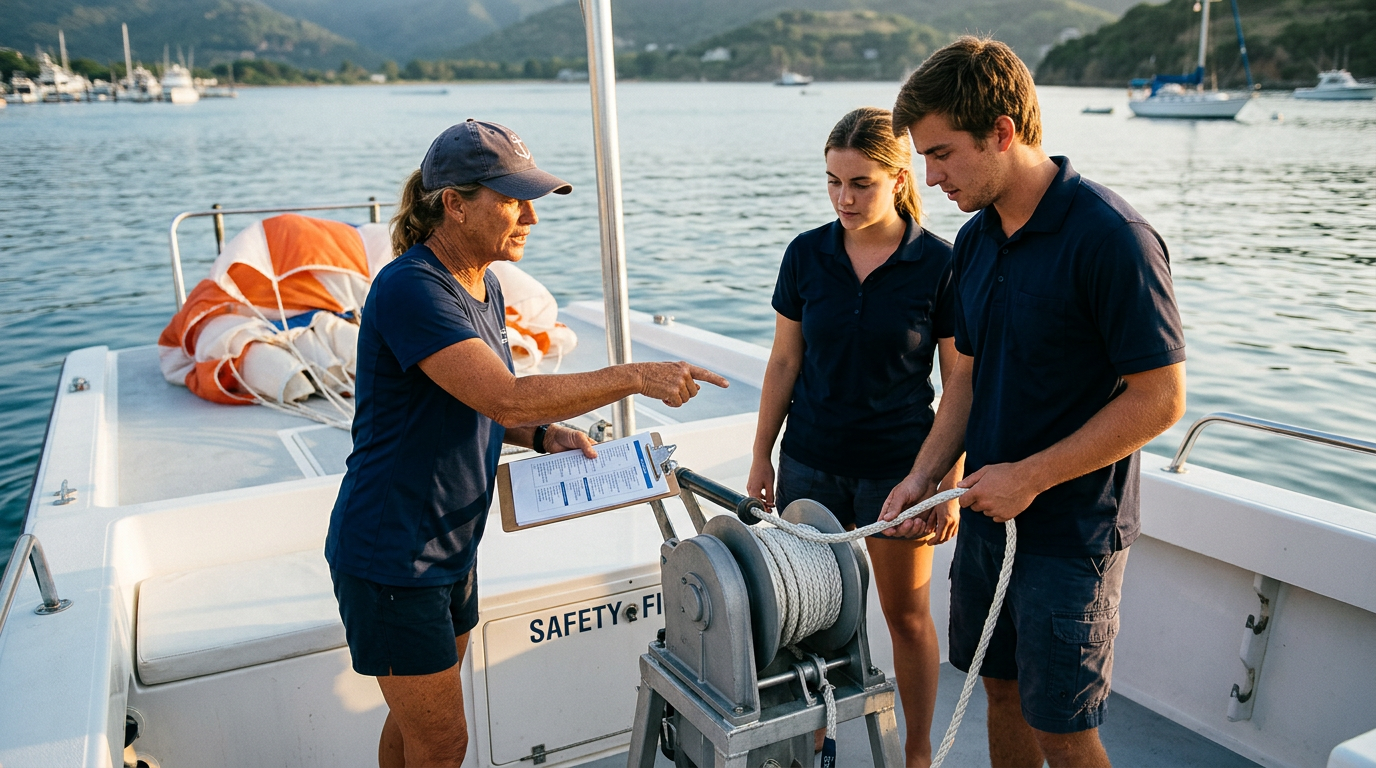
- Winch & Hydraulic Systems: Gaining hands-on expertise in operating and troubleshooting the hydraulic winch system—the heart of any parasail boat like a CWS Ocean Pro 31 or Centurion C-Pro. This includes line management, spooling techniques, and emergency procedures.
- Canopy Management: Understanding how to properly inspect, deploy, and handle various canopy sizes (e.g., 33-foot vs. 37-foot chutes) in different wind conditions.
- Passenger Handling & Flight Control: Mastering the art of smooth takeoffs and landings, communicating effectively with flyers, and managing passenger anxiety.
- Emergency Procedures: Drilling for worst-case scenarios, including winch failure, engine failure, unexpected weather events (downdrafts), and in-water passenger recovery.
Industry bodies like the Water Sports Industry Association (WSIA) and the Professional Association of Parasail Operators (PAPO) have established comprehensive standards that form the foundation of modern parasail training.
What to Look for in a Parasail Training Program
Not all training programs are created equal. When evaluating options for yourself or your crew, prioritize schools that offer a comprehensive curriculum. The best programs blend classroom theory with extensive on-water, hands-on practice.
Key Program Components
- Experienced, Certified Instructors: The lead instructor should be a seasoned Master Captain with thousands of flights logged and certification from the WSIA or PAPO.
- Hands-On Boat & Winch Time: The majority of the course should be spent on a modern parasail vessel, allowing students to perform dozens of flights as both captain and crew. This practical experience is invaluable.
- Comprehensive Ground School: Classroom sessions should cover USCG regulations specific to parasailing, risk management, emergency action plans, equipment maintenance logs, and crew training protocols.
- Emergency Drills: The program must include simulated drills for critical incidents. This includes procedures for a line break, performing a water landing and retrieval, and handling a dual-engine failure on a boat a with twin Yamaha or Mercury outboard setup.
- Small Class Sizes: A low student-to-instructor ratio (ideally no more than 3:1 on the boat) ensures every student gets sufficient time at the helm and on the flight deck.
The Leading US Parasail Training Schools and Certifications
While several excellent local operators offer informal training, the industry largely revolves around two major certifying bodies whose standards are taught at a few key locations. Attending a program that results in a WSIA or PAPO certification is the gold standard.
Parasail Captains (WSIA Certification)
Operated out of Destin, Florida, by industry veteran Matt Middelburg, Parasail Captains is arguably the most well-known dedicated training school in the US. Their program is built around achieving the WSIA Certified Parasail Operator designation.
- Location: Destin, Florida.
- Duration: Typically a 3-day intensive course.
- Curriculum: The program is heavily focused on hands-on application. Students spend the majority of their time on the water, rotating between roles as captain, winch operator, and flight deck crew. The curriculum covers everything from pre-flight checklists and wind meter usage to advanced winch control and emergency water landings. They operate modern CWS boats, giving students experience on current industry-standard equipment.
- Prerequisites: A valid USCG Captain's License is required.
- Outcome: Successful graduates receive the WSIA certification, which is highly respected by insurance carriers and regulators.
PAPO Certified Training
The Professional Association of Parasail Operators (PAPO) provides another industry-leading certification. Unlike a single-location school, PAPO certification is often administered by designated PAPO Master Captains at various member locations across the country, from Hawaii to the Florida Keys.
- Location: Varies; conducted at accredited PAPO member operations.
- Duration: Typically 2-3 days.
- Curriculum: The PAPO standard emphasizes a deep understanding of their comprehensive operations manual, which covers equipment standards, weather parameters, and emergency procedures. The hands-on portion is rigorous, requiring trainees to demonstrate proficiency in all aspects of flight operations under the watchful eye of a certified examiner. The focus is on creating a culture of safety through standardized, repeatable processes.
- Prerequisites: USCG Captain's License.
- Outcome: PAPO certification signifies that an operator has been trained to one of the highest standards in the industry.
Comparison of Top Training Options
| Feature | Parasail Captains (WSIA) | PAPO Certification |
|---|---|---|
| Primary Location | Destin, Florida | Multiple locations via accredited operators |
| Typical Duration | 3 days | 2-3 days |
| Core Focus | Intensive hands-on training; high number of practice flights | Adherence to the comprehensive PAPO manual; standardized procedures |
| Vessel Type | Modern CWS Ocean Pro vessels | Varies by training location, but must meet PAPO standards |
| Key Outcome | WSIA Certified Parasail Operator | PAPO Certified Captain / Crew |
| Estimated Cost | $2,500 - $3,500 per person | $2,000 - $3,000 per person (can vary by location) |
| Best For | Captains seeking a highly immersive, single-location training experience. | Operators seeking certification at their home location or a nearby facility. |
Frequently Asked Questions
Do I need a Captain's License before I can attend a parasail training school?
Yes. All reputable parasail certification programs require you to hold, at a minimum, a USCG OUPV (6-Pack) license. Most professional operations will require a Master license of 25, 50, or 100 tons depending on the vessel's size and inspection status. The parasail training builds upon the foundational knowledge of the USCG license.
Is parasail-specific certification required by law?
It's a mixed bag. There is no overarching federal law mandating it. However, some states, most notably Florida, have specific statutes (like the "White-Miskell Act") that require commercial parasail operators to meet certain safety and equipment standards, often including training certification. More importantly, virtually every marine insurance underwriter will require proof of certification from a recognized body like the WSIA or PAPO before they will issue a policy. In effect, it is mandatory to operate a legitimate, insured business.
How much does it cost to get certified?
The cost for an individual to attend a comprehensive 3-day certification course typically ranges from $2,500 to $3,500. This fee generally covers all instruction, on-water time, and course materials. Travel and lodging are additional expenses. While it seems steep, it is a minor investment compared to the cost of an accident, a lawsuit, or an uninsurable operation.
What is the difference between WSIA and PAPO certifications?
Both are highly respected and considered the top-tier standards in the US. They share the same core goal: promoting parasail safety through rigorous training. The WSIA program, as taught by schools like Parasail Captains, is often noted for its extremely hands-on, high-volume flight training approach. The PAPO certification is built around its detailed procedural manual, emphasizing strict adherence to a documented, industry-vetted safety system. An operator certified by either body is recognized as a trained professional.
Bottom Line
Investing in professional parasail training is the single most important decision an aspiring operator can make. It moves beyond basic boat handling to instill the specialized skills needed to manage a high-performance aircraft, hydraulic systems, and passenger safety in a dynamic marine environment. Choosing a program that culminates in a WSIA or PAPO certification is not just a best practice—it's the cornerstone of a safe, insurable, and successful parasailing business.
Was this helpful?
Written by
Editorial Team
Related articles
How to Become a Parasail Captain
For many, the pinnacle of a day on the water is soaring under a colorful canopy, thousands of feet of line spooling out behind a powerful boat. But for…
Crew Training Best Practices
In the highstakes world of parasailing, the difference between a flawless flight and a critical incident often comes down to one factor: crew training.…