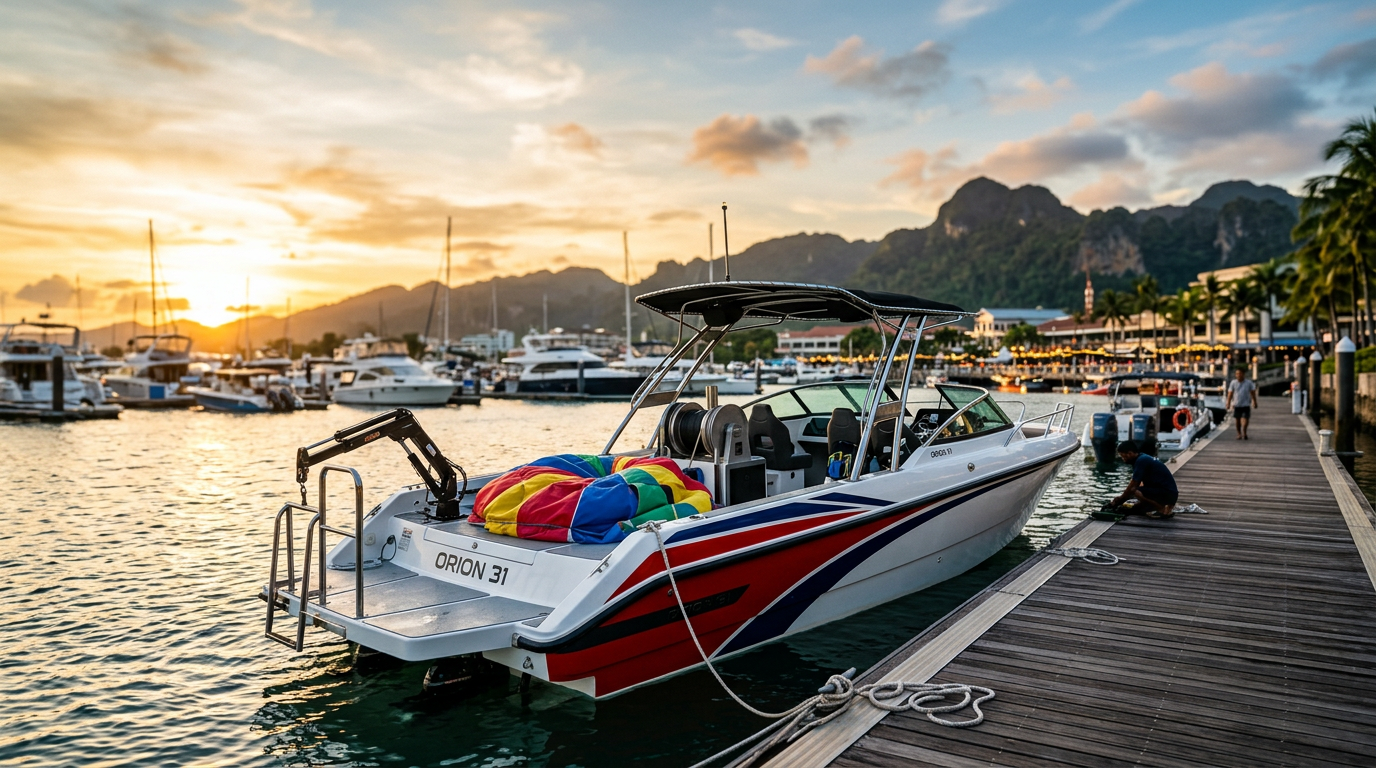
Emerging Builders in the Asia-Pacific Region
For decades, the commercial parasail boat market has been a familiar landscape, dominated by a handful of established American and European parasail boa…
For decades, the commercial parasail boat market has been a familiar landscape, dominated by a handful of established American and European parasail boat manufacturers. However, a significant shift is underway as a new wave of builders from the Asia-Pacific (APAC) region enters the global arena, offering compelling alternatives for operators considering their next fleet investment. These emerging companies are leveraging regional manufacturing prowess and lower production costs to challenge the status quo and capture the attention of the US market.
The Established Order: A Baseline for Comparison
To understand the impact of these new builders, it's essential to acknowledge the current market leaders. Companies like Commercial Water Sports (CWS) with their flagship Ocean Pro series, and other mainstays like Waterbird, have set the industry standard for decades. These boats are known for:
- Proven Designs: Hulls and layouts refined over thousands of operating hours.
- USCG Compliance: Built from the ground up to meet or exceed US Coast Guard regulations for passenger vessels, particularly Subchapter T requirements.
- Robust Support Networks: Established dealer networks, readily available parts, and direct factory support.
- High Resale Value: A strong secondary market exists for well-maintained, US-built parasail vessels.
These builders, often using powerful and reliable single inboard diesel engines from brands like Volvo Penta or Yanmar, represent the benchmark against which all new entrants are measured. Their prices for a new, fully-equipped 31-35 foot boat typically range from $180,000 to $250,000+.
The Rise of the Asia-Pacific Builders
The emergence of APAC manufacturers isn't an overnight phenomenon. It's the result of several converging factors that have created a fertile ground for innovation and export.
Driving Forces Behind the Movement
- Thriving Local Tourism: Countries like Thailand, Indonesia, the Philippines, and Australia have massive tourism sectors. This has created a high-demand domestic market for commercial watercraft, allowing local builders to perfect their designs in real-world, high-traffic environments.
- Manufacturing Expertise: The APAC region is a global hub for shipbuilding and composite manufacturing. Builders there have access to skilled labor, advanced fiberglass and resin infusion technologies, and efficient production facilities.
- Cost Advantages: Lower labor rates and streamlined supply chains can result in a significantly lower ex-factory price point compared to their Western counterparts.
- Adaptable Power Options: While American inboard diesel boats are the norm, many APAC builders are more accustomed to using high-horsepower outboard setups from manufacturers like Yamaha and Mercury, offering a different performance and maintenance profile that appeals to some operators.
Key Players and Regional Characteristics
While the field is constantly evolving, several archetypes of builders are emerging from the region.
- The Southeast Asian Value Leader (e.g., Thailand, Philippines): These builders often produce boats that are functional, durable, and priced aggressively. They may not have the high-end finish of a US boat, but they are proven workhorses in the bustling resorts of Phuket or Boracay. Their designs are typically for 12-15 passengers and are well-suited for high-volume, near-shore operations.
- The High-Tech Contender (e.g., China, Taiwan): Leveraging advanced manufacturing capabilities, these builders can produce highly customized boats with sophisticated composite work. They are often more willing to work with clients on unique layouts and integrate complex electronic systems. Quality can be exceptional, rivaling Western builders, but due diligence on the specific shipyard is paramount.
- The Offshore Specialist (e.g., Australia, New Zealand): Known for building rugged vessels designed to handle challenging sea conditions, builders from this part of the region produce exceptionally well-built boats. They often feature deep-V hulls and heavy-duty construction. While their price point may be closer to US builders, they offer a unique combination of toughness and performance that is attractive for operators in exposed locations.
US vs. APAC Builders: A Comparison for Operators
| Feature | Established US/EU Builders | Emerging APAC Builders |
|---|---|---|
| Base Price | $180,000 - $250,000+ | $120,000 - $190,000 (Ex-Factory) |
| USCG Certification | Typically designed and built for certification. | Requires verification; may need a third-party consultant. |
| Engine Packages | Primarily single inboard diesel (Volvo, Yanmar). | Often flexible (Inboard Diesel, Twin/Triple Outboards from Yamaha, Mercury). |
| Winch System | Integrated, industry-standard systems (e.g., CWS). | May use licensed systems, in-house designs, or require separate sourcing. |
| Shipping & Import | Minimal (domestic shipping). | Significant cost ($15,000 - $30,000+) plus import duties and fees. |
| After-Sales Support | Strong domestic parts and service network. | Reliant on direct factory support, local engine dealer, potential delays. |
| Customization | Standard options with some flexibility. | Often highly flexible and open to bespoke builds. |
Considerations for US Operators
The allure of a lower initial purchase price is strong, but savvy operators must look at the total cost of ownership and operational realities. If you're considering a boat from an APAC builder, here are the critical steps:
- Total Landed Cost: Don't stop at the ex-factory price. Factor in ocean freight, insurance, US import duties (tariffs), customs brokerage fees, and any necessary modifications for US compliance. That $140,000 boat can quickly become a $180,000 boat by the time it reaches your dock.
- USCG Compliance: This is non-negotiable. A boat intended for commercial use with more than six passengers must be able to pass USCG inspection. Engage with the builder and a US-based marine surveyor or naval architect early in the process. Ask for proof of other vessels they have successfully imported and certified in the US.
- Winch and Safety Systems: The winch is the heart of a parasail boat. Scrutinize the winch system. Is it a proven design? Are parts readily available? Ensure all safety features, including the hydraulic bypass and line-handling components, meet or exceed WSIA (Water Sports Industry Association) and PAPO (Professional Association of Parasail Operators) guidelines.
- Powertrain Serviceability: If the boat has a Japanese or European diesel engine, ensure you have a certified local mechanic who can service it. If it's configured for outboards, this is less of an issue, as Yamaha and Mercury have extensive US service networks.
Frequently Asked Questions
Are boats built in Asia safe for commercial parasailing?
The country of origin does not determine safety; the build quality, design, and adherence to standards do. Many APAC builders produce exceptionally robust and seaworthy vessels. The key for a US operator is to perform rigorous due diligence to ensure the specific boat and its systems meet USCG, WSIA, and PAPO safety standards before purchase.
How do I handle parts and warranty claims with an overseas manufacturer?
This is a critical consideration. Discuss the warranty process and parts fulfillment plan in detail before signing a contract. Some builders may have a US-based agent, while others will require you to deal with the factory directly. Expect potential shipping delays for proprietary parts. For common components like pumps, electronics, and engine parts, sourcing locally is often possible.
Can I get financing in the US for a boat built overseas?
Yes, but it can be more challenging. Marine lenders are often more comfortable with known domestic brands that have established resale values. You will need a comprehensive purchase agreement, a professional survey, and a solid business plan. Having a significant down payment will greatly improve your chances of securing a loan.
What is the biggest hidden cost when importing a parasail boat?
Aside from shipping and tariffs, the biggest potential "hidden" cost is post-delivery modifications required to pass USCG inspection. This could involve changes to wiring, plumbing, railing heights, or safety equipment. Using an experienced import consultant or surveyor during the build process can minimize these expensive surprises.
Bottom Line
The global market for parasail boat manufacturers is expanding, providing US operators with more choices than ever before. Emerging builders from the Asia-Pacific region offer a compelling combination of modern construction, customizable designs, and attractive pricing. While the path to importing a vessel requires meticulous planning, comprehensive due diligence, and a clear understanding of USCG regulations, the potential savings and opportunity to acquire a custom-built vessel make these new players impossible to ignore. For operators willing to navigate the complexities, the reward can be a state-of-the-art workboat that sets them apart from the competition.
Was this helpful?
Written by
Editorial Team
Related articles
Centurion Boats: A Profile
For commercial parasail operators, the name on the hull is more than a brand; it’s a commitment to safety, a tool for profit, and a symbol of reliabilit…
Top 10 Parasailing Boat Manufacturers Worldwide
Choosing the right vessel is the single most important decision and capital investment for any commercial parasail operator. The quality, design, and re…
Ocean Pro Marine: Custom-Built Parasail Boats
For professional parasail operators, the boat is the single most important asset, and an offtheshelf model often falls short of specific operational nee…