A Day in the Life of a Parasail Captain
The horizon is just beginning to glow when the work starts, long before the first tourist arrives with a camera and SPF 50. For the professional parasai…
The horizon is just beginning to glow when the work starts, long before the first tourist arrives with a camera and SPF 50. For the professional parasail captain, this quiet dawn is not downtime—it's the critical first step in a day defined by precision, vigilance, and immense responsibility. This role is far more than being a simple boat driver; it's the convergence of being a meteorologist, a master mariner, a mechanic, and a reassuring presence for passengers about to be hoisted 500 feet over the water.
A career as a parasail captain is one of the most unique and demanding positions in the watersports industry. It requires a deep understanding of marine systems, weather patterns, and human psychology, all governed by a strict adherence to safety protocols established by organizations like the WSIA (Water Sports Industry Association) and PAPO (Professional Association of Parasail Operators), alongside mandatory U.S. Coast Guard licensure.
The Pre-Flight Checklist: Dawn to First Departure
The day doesn't begin with turning a key; it begins with a meticulous top-to-bottom inspection. Long-standing operators know that failures are prevented on the dock, not managed in an emergency.
Vessel and Systems Check
Before a single passenger steps aboard, the captain and mate conduct a thorough vessel audit. On a typical purpose-built parasail boat, like an Ocean Pro 31 or a Centurion Fi33, this involves:
- Engine & Drivetrain: Checking fluid levels (oil, coolant), inspecting belts and hoses for wear, and visually checking engine mounts and exhaust systems. Whether it's a workhorse Yanmar diesel inboard or a pair of high-thrust Mercury or Yamaha outboards, reliability is paramount.
- Winch System: This is the heart of the operation. The captain checks hydraulic fluid levels, inspects lines and fittings for leaks, and confirms the smooth operation of the winch drum and level-wind. The parasail line itself is visually inspected along its entire accessible length for any sign of fraying, discoloration, or sun degradation.
- Safety Equipment: This is a non-negotiable USCG requirement. The captain confirms the correct number and condition of PFDs (life jackets), the service date on fire extinguishers, the integrity of flares and signaling devices, and the contents of the first aid kit.
- Fuel and Bilge: Confirming adequate fuel for the day's planned operations and ensuring bilge pumps are clean, operational, and set to automatic.
Gear and Weather Inspection
Once the vessel is cleared, attention turns to the flight equipment. Every piece of gear is inspected before the first use of the day. Harnesses are checked for worn webbing or compromised stitching. Carabiners and hardware are examined for function and fatigue. The parasail chutes themselves are inspected for any tears, separated seams, or signs of porosity that could affect flight characteristics.
Simultaneously, the captain becomes a meteorologist. This goes beyond a quick glance at a phone app. It involves analyzing marine forecasts, checking real-time wind sensor data if available, monitoring VHF weather channels, and looking at the sky. The key is not just the current wind speed, but its potential. Is it steady or gusty? Is there a forecast for thunderstorms later in the day? A responsible parasail captain knows their operational limits—typically a sustained wind of around 15-18 mph—and will never push them.
On the Water: Managing Flights and Customers
With pre-flight checks complete, the business of flying begins. The captain's role now shifts to trip manager and master operator. After a clear, concise safety briefing covering hand signals, takeoff/landing procedures, and emergency instructions, the boat heads out.
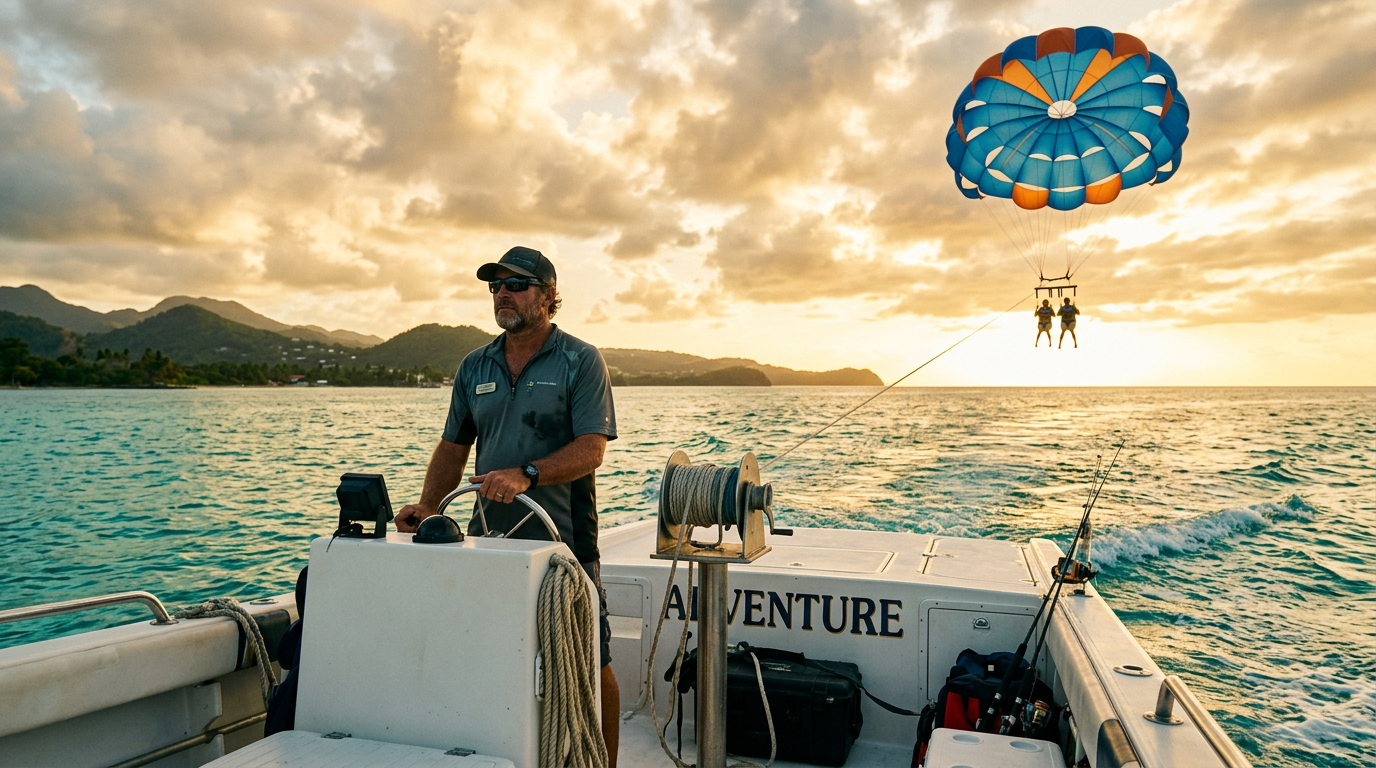
The captain’s seat is a command center. One hand is on the wheel, steering the vessel to maintain the perfect heading relative to the wind. The other hand is on the hydraulic winch controls. It's a delicate dance, using throttle and winch speed to orchestrate a smooth, controlled ascent for the flyers. Throughout the flight, the captain’s attention is divided:
- On the Flyers: Constantly monitoring their comfort, position, and the status of the chute.
- On the Line: Watching the parasail line for any oscillation or issue.
- On the Water: Maintaining awareness of all other boat traffic, water depth, and any potential hazards.
- On the Weather: Watching the horizon and sky for any change in conditions.
The iconic "dip," where flyers are gently lowered to touch the water, is a maneuver requiring extreme precision. The captain must judge the boat's speed, the flyers' momentum, and the winch payout speed perfectly to provide a fun splash without compromising safety. Landing is even more skill-intensive, requiring the captain to slow the boat and retrieve the line at a rate that brings the flyers to a soft, stand-up landing on the vessel's flight deck.
Parasail Boat Platform Comparison
Not all parasail boats are created equal. The choice of vessel significantly impacts operations, maintenance, and profitability. Captains must be intimately familiar with their platform's unique characteristics.
| Feature | Inboard Diesel (e.g., Ocean Pro 31') | Outboard Gas (e.g., CWS 33') |
|---|---|---|
| Propulsion | Single diesel engine, shaft drive | Twin high-horsepower outboards |
| Initial Cost | Higher ($250,000+) | Lower ($180,000+) |
| Fuel Economy | Excellent | Good to fair, depends heavily on RPMs |
| Maintenance | Specialized diesel mechanic required | Easier to service or replace powerheads |
| Maneuverability | Good, excellent with bow thruster | Exceptional, with independent trimming |
| Flight Deck | Large, clear, unobstructed transom | Can be partially obstructed by engines |
| Best For | High-volume, all-day commercial operations | Versatility, areas with shallow water |
The Unseen Challenges
The idyllic images of parasailing mask the constant potential for serious issues. A seasoned parasail captain earns their pay by managing these challenges with calm authority. A sudden squall line can require an immediate, and sometimes difficult, retrieval of flyers in deteriorating conditions. A burst hydraulic hose on the winch or an overheating engine demands instant troubleshooting to ensure a safe resolution. The captain is the first responder, problem solver, and ultimate decision-maker when things don't go as planned.
End of Day: Securing the Operation
After the last flight, the work isn't over. The boat is piloted back to the dock, and a post-operation checklist begins. Engines are flushed with freshwater, the entire boat is hosed down to remove corrosive salt, and all equipment is stowed. The captain logs the day's engine hours, total number of flights, and any maintenance or equipment notes. This data is vital for tracking service intervals and identifying potential issues before they become critical.
Frequently Asked Questions
What licenses are required to be a parasail captain?
At a minimum, a parasail captain in the U.S. must hold a USCG Operator of Uninspected Passenger Vessels (OUPV), commonly known as a "6-Pack" license. Most professional operations require a Master Captain's License (25, 50, or 100-ton, depending on the vessel). Reputable operators also mandate industry-specific training and certification from organizations like the WSIA or PAPO.
How much can a parasail captain earn?
Compensation varies widely by location, experience, and operational structure. Captains can earn anywhere from $25 to $50+ per hour, or they may be paid a percentage of the trip revenue. When factoring in tips, which can be substantial on busy days, experienced captains at high-volume locations can earn a seasonal income well over $50,000.
What is the typical replacement schedule for a parasail line?
Parasail lines are replaced based on the number of flights, not calendar time. While manufacturer specifications vary, a common replacement interval is between 200 and 500 flights. The exact number depends on the line's load rating and the average weight of the flyers. Meticulous flight logging is critical for adhering to this crucial safety protocol.
What's the most difficult part of the job?
While boat handling and winch operation are technical skills, most veteran captains agree the hardest part is the unrelenting mental load. The constant situational awareness, the ultimate responsibility for every soul on board, and the need to make critical safety decisions under pressure are the true challenges of the role.
Bottom Line
A day in the life of a parasail captain is a masterclass in professional seamanship. It's a demanding career that strips away any romantic notions about "playing on the water" and replaces them with a reality of technical expertise, profound responsibility, and an unwavering commitment to safety. For those who can meet the challenge, it offers one of the most rewarding and unique offices in the world.
Was this helpful?
Written by
Editorial Team
Related articles

Top Parasail Destinations Around the World
A postcardperfect coastline and a steady stream of tourists are merely the table stakes for success in our industry. For seasoned operators evaluating n…
The Community Behind the Sport
From the apex of a flight, a thousand feet above the water, the world below looks serene and simplified.

How to Start a Parasailing Business: Boat, License & Costs
A founder's roadmap to start a parasailing business, from license to opening day.