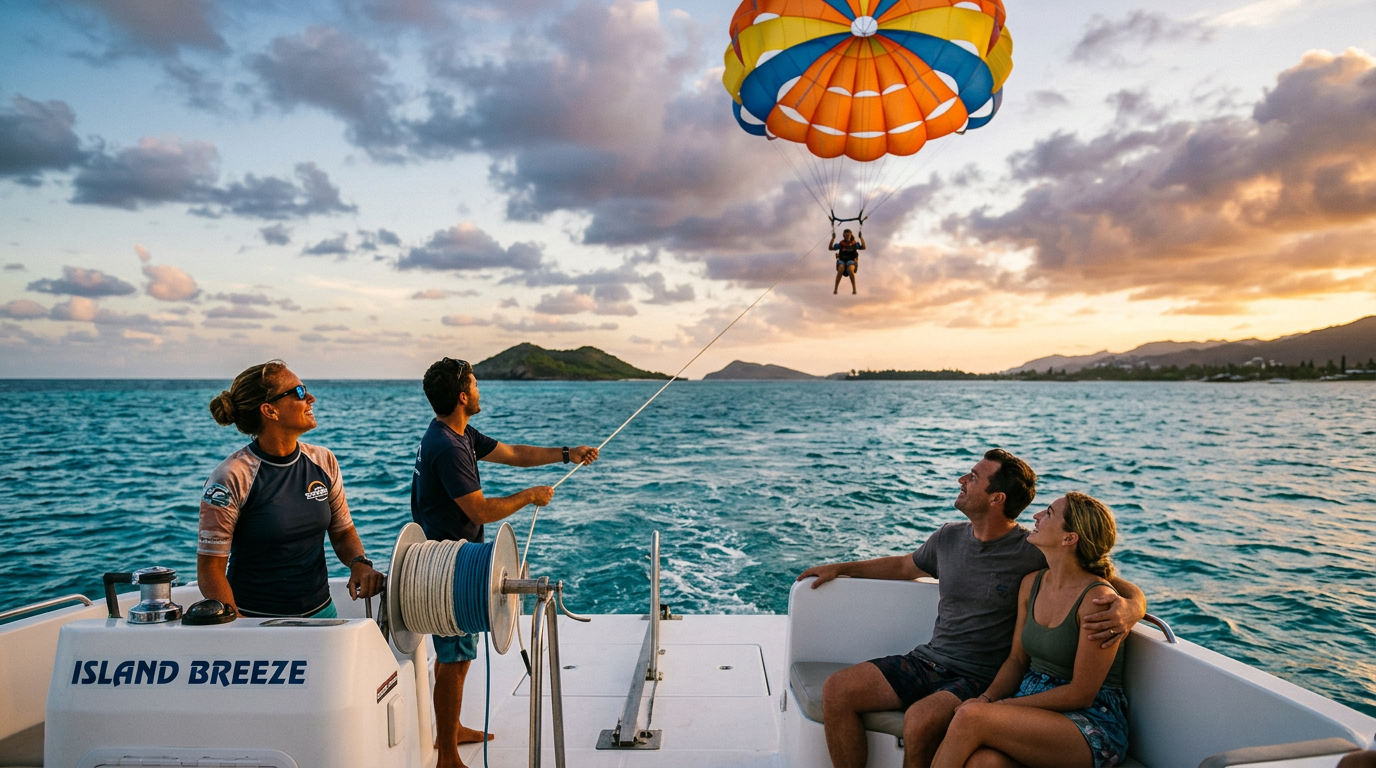
The Community Behind the Sport
From the apex of a flight, a thousand feet above the water, the world below looks serene and simplified.
From the apex of a flight, a thousand feet above the water, the world below looks serene and simplified. What customers don't see from that peaceful vantage point is the intricate and dedicated network of professionals on the ground and water who make it all possible—the community behind the sport. This ecosystem of captains, crew, manufacturers, and regulators forms the bedrock of a safe and thriving parasail industry.
The On-Water Professionals
The most visible members of the parasail community are the captain and crew, the daily face of the operation. Their professionalism and skill are the direct link between a customer's decision to fly and their safe return to the boat deck.
The Captain
A parasail captain is far more than a boat driver. They are the ultimate authority on the vessel, responsible for the safety of everyone aboard. In the United States, this requires at a minimum a USCG Operator of Uninspected Passenger Vessels (OUPV or "6-Pack") license, though most professional operations prefer or require a Master Captain's license, which allows for carrying more than six passengers.
Beyond licensing, a top-tier captain possesses skills honed over hundreds, if not thousands, of hours on the water:
- Weather Interpretation: They are amateur meteorologists, constantly reading wind conditions, cloud formations, and sea states to determine if conditions are safe for flight.
- Vessel Handling: Maneuvering a 31- to 35-foot parasail boat in tight quarters, high winds, and choppy seas requires immense skill, especially when launching and landing flyers on the flight deck.
- Mechanical Aptitude: While not full-blown mechanics, they must have a working knowledge of their boat's systems, from the powerful diesel or twin outboard engines (like Yamaha or Mercury) to the hydraulic winch.
- Risk Management: Their most critical job is making the final "go/no-go" decision for every flight, balancing customer expectations with unwavering safety protocols.
The Crew
Often the unsung hero, the crew member or first mate is the engine of the customer experience. They are the primary instructor, harness-fitter, and winch operator. Their responsibilities include:
- Delivering the safety briefing clearly and confidently.
- Properly fitting and checking every harness for every flyer.
- Communicating with flyers using hand signals during launch and recovery.
- Operating the hydraulic winch with precision to ensure a smooth ascent and descent.
- Acting as a second set of eyes for the captain, watching for other boat traffic and monitoring the flyers in the air.
This role is physically demanding and requires a unique blend of strength, technical skill, and customer service charm.
The Builders and Innovators
The hardware of parasailing—the boats and equipment—is purpose-built for the unique demands of the sport. These manufacturers are a cornerstone of the community, constantly refining their products for safety, durability, and efficiency.
Parasail Boat Manufacturers
Modern parasail vessels are not simply repurposed pleasure craft. They are highly specialized platforms designed from the keel up for commercial operations. Leading builders include Ocean Pro Marine and Custom Chute Boats (formerly an arm of Centurion).
Key features of a dedicated parasail boat include:
- Integrated Winch System: A powerful hydraulic winch and line-management system is built directly into the boat's structure.
- Flight Deck: A large, flat, non-skid platform on the stern for launching and recovering an inflated parachute and passengers.
- Power and Propulsion: These boats are often equipped with a single, high-torque diesel engine (400-550 HP from brands like Yanmar or Volvo Penta) or powerful twin outboards (totaling 500-700 HP) for the power needed to get on plane quickly with a dozen passengers and a deployed chute.
- Passenger Capacity: Typically certified by the USCG to carry 12 to 15 passengers plus crew, maximizing operational efficiency.
A new, fully-equipped 31-foot parasail boat from a reputable manufacturer can represent an investment of $250,000 to over $400,000, reflecting the specialized engineering involved.
Equipment Manufacturers
Safety in parasailing is a system, and every piece of gear is a critical link. Companies specialize in designing and manufacturing the parachutes, harnesses, and flight lines.
Critical Parasail Gear
| Equipment | Description | Key Features |
|---|---|---|
| Parasail Chute | The "wing" that provides lift. Comes in various sizes for different wind conditions. | High-lift, low-drag designs. Reinforced construction with high-tensile strength ripstop nylon. Color-coded for wind speed application (e.g., small for high wind, large for low wind). |
| Harness System | Connects the flyer to the flight bar. Modern systems use a multi-point body harness. | Deluxe versions feature padded leg straps and seat-style support for comfort. All are made with UV-resistant webbing and load-rated buckles. |
| Flight Line | A specialized, double-braided, low-stretch rope connecting the parasail to the boat's winch. | Typically 1/2" or 3/8" diameter with a tensile strength exceeding 6,000 lbs. Designed to float and resist abrasion and UV degradation. |
| Winch & Hydraulics | The heart of the launch/recovery system. | Self-leveling or manually controlled systems. Modern units have built-in safety features and digital line counters. |
The Stewards of Safety
Guiding the community are organizations dedicated to establishing and promoting best practices. The Water Sports Industry Association (WSIA) and its parasail-specific committee, the Parasail Operators Professional Organization (PAPO), are paramount. They provide:
- Operational Standards: A comprehensive manual outlining best practices for everything from daily vessel checks to wind speed limits.
- Training and Certification: Programs for captains and crew that go beyond basic licensing, focusing on the specific skills needed for parasailing.
- Advocacy: Representing the industry's interests and working with regulatory bodies like the USCG to ensure rules are both effective and practical.
Adherence to WSIA standards is the hallmark of a professional operator and a key way for the community to self-regulate and prioritize safety above all else.
Frequently Asked Questions
What's the typical career path to becoming a parasail captain?
Most captains start as crew/mates for one or two seasons. This period is crucial for learning vessel handling, weather patterns, and operational procedures firsthand. During this time, they work toward their USCG license and gain the necessary sea time. Once licensed, they may move into a captain's role at the same operation or seek opportunities elsewhere.
How much does a new, fully-equipped parasail boat cost?
The price varies by size, engine choice, and options, but operators can expect to invest between $250,000 and $400,000+ for a new, turn-key vessel from a leading U.S. manufacturer. This price includes the boat, engine(s), integrated winch system, and USCG-required safety equipment.
What is the most important role of the WSIA for a parasail operator?
While the WSIA serves many functions, its most important role is providing a unified set of professional operating standards. Adhering to these standards helps operators mitigate risk, improve safety, secure better insurance rates, and demonstrate a commitment to professionalism that builds trust with both customers and regulators.
Why are single diesel engines so popular in parasail boats?
Single inboard diesel engines are popular for several reasons: they produce immense torque at low RPMs, which is ideal for pulling a chute; they are generally more fuel-efficient for all-day commercial use than gasoline outboards; and their central placement provides excellent balance and frees up the transom for a clear flight deck.
Bottom Line
The next time you see a parasail high in the sky, look beyond the colorful chute. See the captain at the helm, the crew on the deck, the engineers who designed the boat, and the associations that set the standards. It's not just an activity; it's a profession supported by a deep and dedicated community committed to sharing the thrill of flight safely and responsibly.
Was this helpful?
Written by
Editorial Team
Related articles

Top Parasail Destinations Around the World
A postcardperfect coastline and a steady stream of tourists are merely the table stakes for success in our industry. For seasoned operators evaluating n…
A Day in the Life of a Parasail Captain
The horizon is just beginning to glow when the work starts, long before the first tourist arrives with a camera and SPF 50. For the professional parasai…

How to Start a Parasailing Business: Boat, License & Costs
A founder's roadmap to start a parasailing business, from license to opening day.