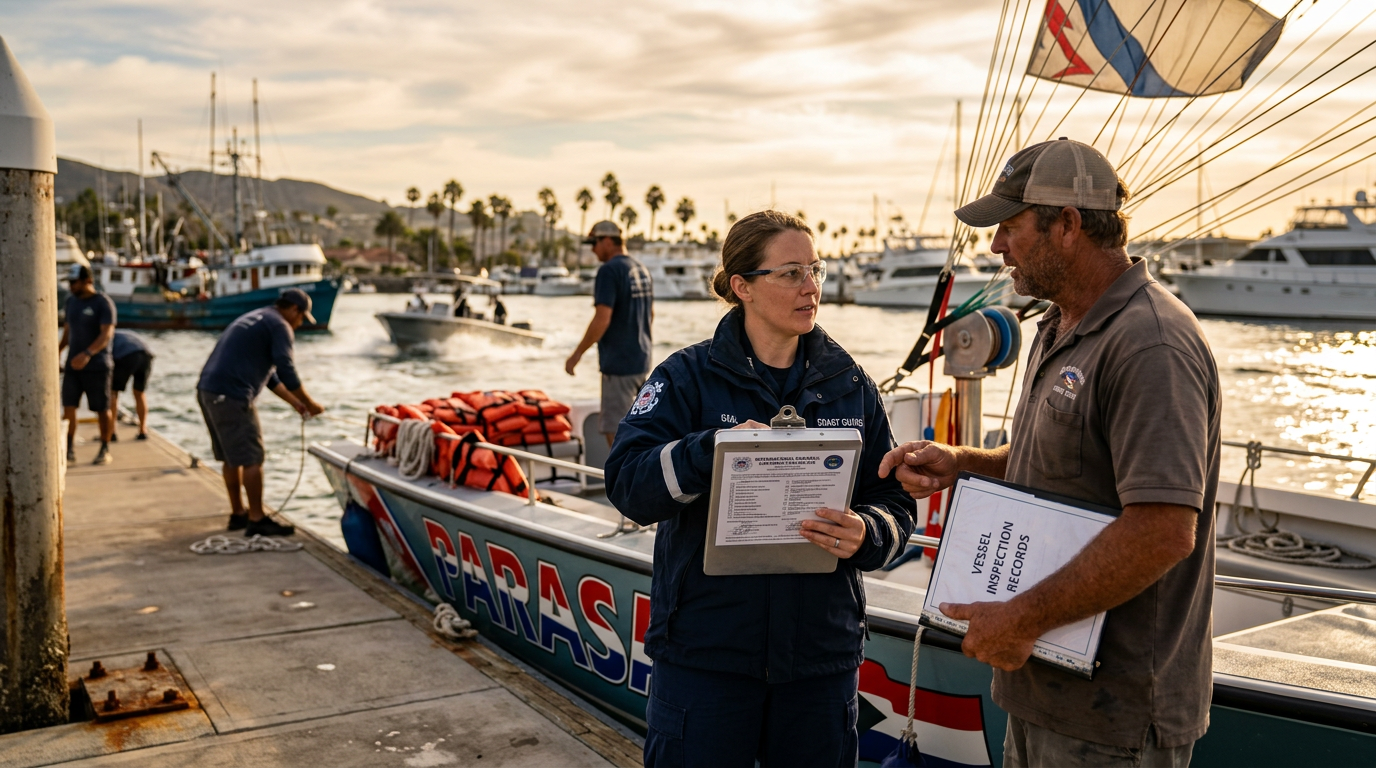
International Parasail Certifications
Expanding your parasail operation beyond US borders presents a thrilling business opportunity, but successfully navigating the complex web…
Expanding your parasail operation beyond US borders presents a thrilling business opportunity, but successfully navigating the complex web of international parasail certifications is paramount. Unlike the United States, where organizations like the WSIA and PAPO provide a clear framework, the global landscape is a mosaic of national regulations, regional standards, and areas with little to no oversight. Understanding these differences isn't just about compliance; it's about ensuring safety, securing insurance, and building a professional, sustainable business anywhere in the world.
The US Standard as a Global Benchmark
Before examining international requirements, it's crucial to understand the US system, as it often serves as a de facto benchmark for quality and safety worldwide. In the US, a reputable operator typically holds a combination of credentials:
- US Coast Guard (USCG) Captain's License: Usually an OUPV "6-Pack" or a Master license, depending on the vessel size and number of passengers. This is a legal requirement for carrying passengers for hire on commercially registered vessels.
- WSIA/PAPO Training & Certification: The Water Sports Industry Association (WSIA) and the Professional Association of Parasail Operators (PAPO) offer hands-on, industry-specific training. These programs go far beyond the USCG curriculum, covering parasail-specific topics like winch operation, weather assessment, parachute inspection, and emergency procedures.
While a USCG license is only valid on US-flagged vessels, the principles and operational skills taught by PAPO and WSIA are universally applicable. Many international insurers and even some foreign maritime authorities recognize the rigor of these programs and may view them favorably when assessing a new operation.
Key International Certifications and Regional Players
When you operate overseas, you'll find that there is no single, globally recognized parasail certification. Instead, credentialing is typically handled on a national or regional level, often by the country's primary maritime authority. The key is to investigate the specific requirements for your target country of operation.
The Influence of European & UK Standards
The European and UK maritime sectors are highly regulated, and their standards often influence practice in their former territories, particularly in the Caribbean and Mediterranean.
- Royal Yachting Association (RYA): Based in the UK, the RYA is a globally respected body for boating education. While they don't have a dedicated "parasail" certification, their commercial endorsements for powerboat and yachtmaster qualifications are often a prerequisite for operating commercially. An operator in a place like the British Virgin Islands or Gibraltar would likely need an RYA Advanced Powerboat Certificate of Competence with a commercial endorsement.
- International Yacht Training (IYT) Worldwide: IYT provides a similar suite of courses to the RYA and has a strong presence globally. Their Master of Yachts and powerboat certificates are recognized by numerous maritime administrations as an equivalent to national licenses for commercial operations.
- National Maritime Authorities: Each country has its own authority, such as the Maritime and Coastguard Agency (MCA) in the UK or the Hellenic Coast Guard in Greece. These bodies issue the local equivalent of a captain's license, which is a non-negotiable starting point. Obtaining this often requires passing local exams, which may be administered in the local language.
PAPO International: Extending the US Model
Recognizing the need for standardized, specific parasail training abroad, PAPO has an international arm. PAPO International offers the same hands-on training and operational standards as its US counterpart. This certification is highly valuable for several reasons:
- Insurance: It is often required by major marine insurance underwriters who cover parasail operations globally.
- Best Practices: It ensures your crew is trained in critical areas like daily equipment checks, winch maintenance, and passenger handling, regardless of what local law mandates.
- Credibility: It demonstrates a commitment to safety that can differentiate your business in a crowded resort market.
A PAPO International course often involves trainers traveling to your location to certify your entire crew on your specific vessel, whether it's a CWS Ocean Pro 35 powered by a Yamaha diesel or a classic Centurion with a Mercury outboard.
Comparing International Certification Pathways
Choosing the right certification path depends entirely on your location and business goals. The following structured list compares a few common scenarios.
-
Scenario 1: Operating in the Bahamas
- Maritime Authority: Bahamas Maritime Authority (BMA).
- Required License: A Bahamian "A" or "B" class commercial license. This is a national requirement and foreign licenses (including USCG) are not a direct substitute. You must apply and pass exams locally.
- Industry Certification: PAPO International or WSIA certification is highly recommended. It will be required by your insurer and provides essential, parasail-specific training that the BMA license does not cover.
- Typical Process:
- Establish a Bahamian business entity.
- Obtain the necessary BMA vessel registration and captain's licenses for crew.
- Separately, contract with PAPO or another recognized trainer for operational parasail certification to satisfy insurance and safety protocols.
-
Scenario 2: Operating in the Greek Islands
- Maritime Authority: Hellenic Coast Guard.
- Required License: A Greek-issued professional skipper/powerboat license. This can be a challenging process involving bureaucracy and language barriers. Working with a local maritime consultant is advised.
- Industry Certification: While less formally recognized by authorities than in other regions, a reputable training certificate is still crucial for insurance and demonstrates a higher standard of care, which can be vital in the event of an incident.
- Typical Process:
- Fulfill all Greek business and vessel registration requirements.
- Have crew members obtain the mandatory Hellenic Coast Guard license.
- Supplement with internal training based on WSIA/PAPO standards.
-
Scenario 3: Operating in a Less Regulated Region (e.g., parts of Southeast Asia or Central America)
- Maritime Authority: May be minimal or non-existent for small commercial watersports.
- Required License: Local port captain or tourism police may have simple permit requirements, but potentially no formal training or testing.
- Industry Certification: This is where PAPO/WSIA certification becomes absolutely critical. In the absence of government oversight, this third-party certification is the only thing ensuring you have a provable safety standard. Your insurance underwriter will almost certainly mandate it as a condition of coverage.
- Typical Process:
- Research all local business permit requirements.
- Proactively adopt WSIA/PAPO standards as your company's official operating procedure.
- Make certification a non-negotiable hiring requirement for all captains and crew.
Frequently Asked Questions
Is my USCG Captain's License valid for operating internationally?
No. A USCG license is only valid for skippering US-flagged vessels. When operating a foreign-flagged vessel in another country's territorial waters, you must have a license issued or recognized by that country's maritime authority.
What is the single most important certification for an international operation?
There isn't a single one, but a two-part answer. First, you absolutely must have the commercial captain's license required by the host country's maritime authority—this is the legal foundation. Second, for safety, insurance, and professionalism, a parasail-specific certification from an organization like PAPO International is a business necessity, especially in regions with lax government oversight.
How much do these international certifications cost?
Costs vary dramatically. Obtaining a local captain's license can range from a few hundred dollars in administrative fees to several thousand if extensive training courses, exams, and consultant fees are involved. A hands-on course like PAPO International can cost $1,500 to $2,500 per person, plus any travel expenses for the trainer.
Can I get my crew certified on-site at my international location?
Yes, this is a common and highly effective practice. Organizations like PAPO International can send a certified trainer to your location. This allows your crew to train on the specific boat (e.g., a Custom Water Sports 31) and in the local flying conditions they will face every day, which is far more valuable than generic classroom training.
Bottom Line
Operating a parasail business abroad requires a dual focus on certification. You must satisfy all the legal requirements of the host country's maritime authority while simultaneously upholding the operational best practices defined by industry leaders like PAPO and the WSIA. This commitment not only ensures you can secure insurance and avoid legal trouble but also builds the foundation of a safe, reputable, and profitable international enterprise. Diligent research and a refusal to cut corners on training are the keys to success.
Was this helpful?
Written by
Editorial Team
Related articles
USCG Certifications for Parasail Operators
For passengers, parasailing is a breathtaking view from 500 feet. For the professional on the deck, it's a complex marine operation where safety and com…
PAPO Certification Explained
For professional parasail operators, ensuring the highest standards of safety and operational excellence isn't just good practice—it's the bedrock of a…
WSIA Certification: Everything You Need to Know
For a professional parasail operator, ensuring passenger safety while managing a profitable business is the ultimate balancing act. Achieving a WSIA cer…