PAPO Certification Explained
For professional parasail operators, ensuring the highest standards of safety and operational excellence isn't just good practice—it's the bedrock of a…
For professional parasail operators, ensuring the highest standards of safety and operational excellence isn't just good practice—it's the bedrock of a sustainable business. While many standards and regulations exist, achieving PAPO certification signals a commitment to safety that goes above and beyond the minimum requirements. This credential from the Professional Association of Parasail Operators represents the industry's gold standard, offering a clear framework for mitigating risk and building customer trust.
What is PAPO?
The Professional Association of Parasail Operators (PAPO) is a non-profit organization founded in the early 1990s by a group of experienced operators. Their mission was, and remains, to establish a unified set of rigorous safety standards, best practices, and professional ethics for the commercial parasailing industry. At its core, PAPO is an organization created by operators, for operators, with an unwavering focus on accident prevention and public safety.
Unlike broad governing bodies, PAPO concentrates exclusively on the unique operational challenges of parasailing. This includes everything from real-time weather monitoring and equipment maintenance to crew training and emergency procedures. The organization provides a comprehensive framework that addresses the entire operation, not just individual components like vessel compliance or captain licensing. It fills a crucial gap, creating a verifiable standard in an industry where regulations can vary significantly from state to state. By promoting a culture of safety and continuous improvement, PAPO helps elevate the professionalism and public perception of the entire industry.
Breaking Down PAPO Certification: What Does It Involve?
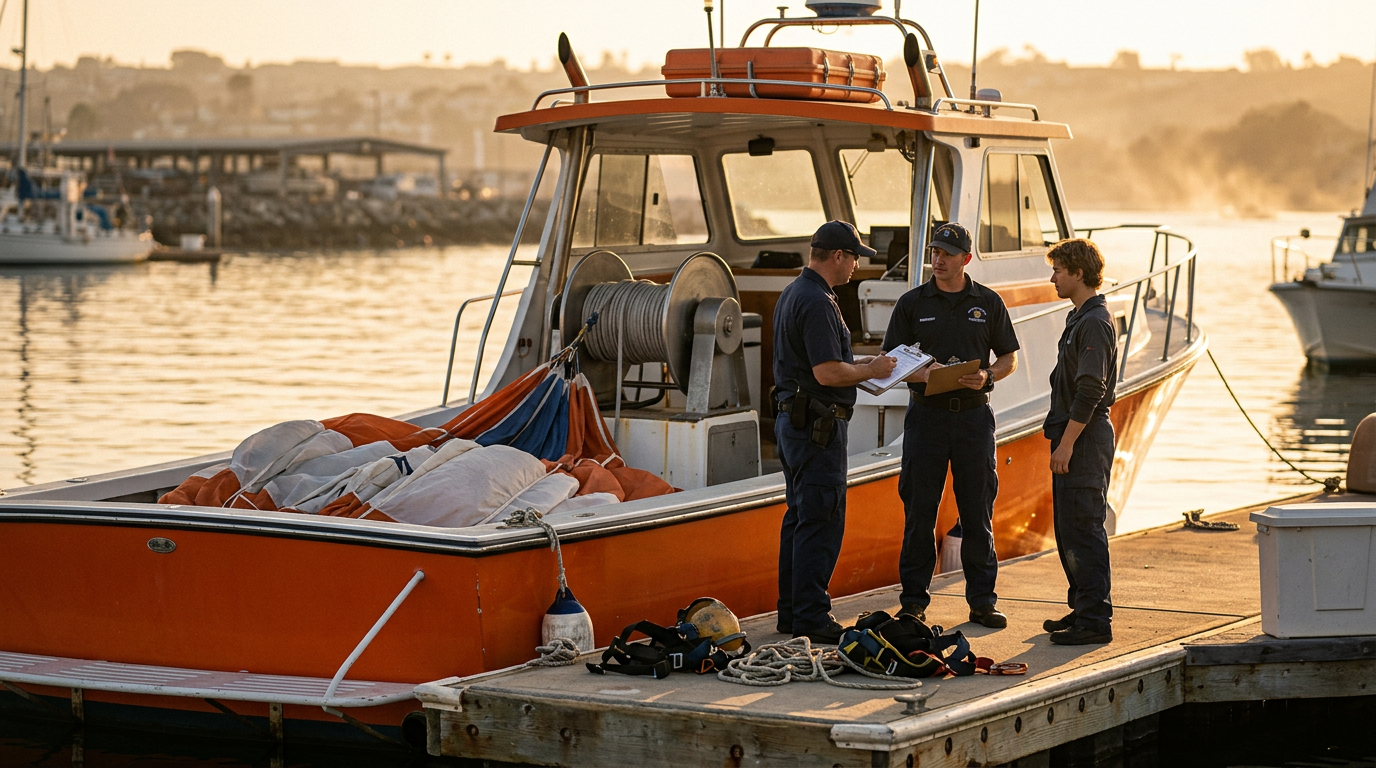
Achieving PAPO certification is a demanding process that involves a comprehensive, third-party audit of an operator's entire business. It is far more than a simple checklist; it is an in-depth, on-site inspection designed to verify that the operation meets the highest safety benchmarks. An operator cannot simply pay a fee and receive a sticker. They must prove their commitment through verifiable actions, documentation, and equipment.
The audit focuses on several key areas:
The Vessel and Powertrain
The parasail boat is the heart of the operation. The PAPO inspector scrutinizes the vessel to ensure it is purpose-built or properly modified for commercial parasailing and is in excellent material condition.
- Vessel Condition: This includes the hull, deck, and all fittings. There can be no signs of structural damage, soft spots on the deck, or significant corrosion. The boat, whether it's an Ocean Pro 31, a CWS Ocean Wolf, or another industry-standard vessel, must be impeccably maintained.
- Engine and Propulsion: The inspector checks the engine bay for cleanliness, proper wiring, secure fuel lines, and evidence of regular maintenance. Engines from trusted brands like Yamaha, Mercury, or Volvo Penta are common, and their service records are reviewed. The inspector ensures the boat has adequate power for its rated passenger capacity, typically ranging from 300hp to 450hp+.
- Winch System: The hydraulic winch and line level-winder are critical safety components. The inspector examines the system for leaks, worn parts, and proper function. The towline itself is inspected for abrasion, UV damage, and age, with requirements for regular replacement.
Safety and Parasail Equipment
This portion of the audit confirms that all required safety gear is present, in-date, and in good working order.
- USCG-Required Gear: The inspector verifies the presence and condition of USCG-approved personal flotation devices (PFDs) for every passenger and crew member (typically Type I), a throwable device (Type IV), current visual distress signals (flares), fire extinguishers, and sound-producing devices.
- Parasail-Specific Gear: The audit goes deeper, examining the parasails (chutes), harnesses, and spreader bars. Chutes are checked for tears, frayed stitching, and canopy porosity. Maintenance logs that track the flight hours and inspection history of each chute are mandatory. Harnesses and support straps must be free of excessive wear and tear.
Crew and Documentation
A safe operation depends on a qualified crew and meticulous record-keeping.
- Captain's Credentials: The captain must hold a valid USCG Master Captain’s License or an OUPV ("6-Pack") license, as appropriate for the vessel and passenger count. Proof of enrollment in a mandatory drug testing program is also required.
- Crew Training: The inspector will observe or inquire about the crew’s training on emergency procedures, passenger briefing, and hand signals.
- Operational Logs: The auditor reviews daily logs, which must include weather observations, equipment checks, and passenger counts. Comprehensive maintenance records for the engine, winch, and parasail equipment are also scrutinized.
- Insurance: Proof of adequate liability insurance—often in the range of $1,000,000 to $2,000,000—is a non-negotiable requirement.
PAPO vs. Other Industry Standards
Operators often navigate a complex web of requirements. PAPO certification is a voluntary standard that complements, and in many ways exceeds, other regulations.
| Feature / Standard | PAPO Certification | WSIA Parasail Standard | Minimum USCG Compliance |
|---|---|---|---|
| Primary Focus | Holistic operational safety for parasailing, including business practices. | Equipment manufacturing standards and operator education. | Vessel safety, navigation rules, and captain licensing. |
| Verification Method | Mandatory annual on-site, third-party audit of vessel, gear, and crew. | Primarily an educational credential for the operator/captain. | Dockside safety exams or vessel inspections (often for COI). |
| Vessel Inspection | Detailed inspection of all systems, including winch and parasail-specific modifications. | Not a primary component; focuses on training. | Focuses on hull, machinery, and lifesaving equipment, not parasail gear. |
| Equipment Standard | Requires adherence to PAPO standards for lines, chutes, and hardware, with logged inspections. | Develops and promotes ASTM standards for equipment manufacturing. | No specific regulations for parasail equipment itself. |
| Key Requirement | Passing a comprehensive on-site audit. | Passing a written exam after a training seminar. | Possessing a valid Captain's License and meeting vessel safety rules. |
This table illustrates that while WSIA and the USCG provide critical pieces of the safety puzzle, PAPO is unique in its requirement for a holistic, on-site verification of the entire parasailing operation.
The Value of PAPO Certification
Pursuing this certification is a significant investment of time and resources, but the return is substantial.
- Enhanced Safety and Risk Mitigation: The standards are based on decades of incident data and best practices. Adherence directly reduces the likelihood of equipment failure and human error.
- Insurance and Liability: Many marine insurance underwriters view PAPO certification favorably. Certified operators may gain access to better policies or lower premiums because the certification demonstrates a proactive approach to risk management.
- Competitive Advantage: In a crowded market, the PAPO seal is a powerful marketing tool. It instantly communicates a commitment to safety that customers can understand and trust, justifying premium pricing and attracting discerning clientele.
- Regulatory Foresight: PAPO standards often exceed state-level regulations, like Florida's Ariel "White-Miskell" Act. Being PAPO certified ensures an operator is already compliant with the strictest rules and is well-prepared for any future legislative changes.
Frequently Asked Questions
How much does PAPO certification cost?
The cost can vary, but operators can generally expect an initial audit fee in the range of $750 to $1,500, which covers the inspector's time and travel. Following a successful audit, there are annual membership dues to maintain certification, which are typically a few hundred dollars.
Is PAPO certification required by law?
No, PAPO certification is a voluntary, industry-led standard. However, its reputation is so strong that some local jurisdictions, marinas, or insurance providers may require it as a condition of operation or coverage. It is widely considered the de facto "gold standard" for safe parasailing.
What is the difference between a PAPO-certified operator and a USCG-inspected vessel?
A USCG Certificate of Inspection (COI) is required for vessels carrying more than six paying passengers. The inspection focuses on the vessel's construction, stability, and required safety equipment to federal standards. PAPO certification, on the other hand, audits the entire parasailing activity, including the captain's and crew's operational procedures, parasail-specific equipment, weather monitoring, and business practices, regardless of whether the boat requires a COI.
How long does the certification last?
PAPO certification is valid for one year. Operators must undergo the full on-site audit annually to ensure ongoing compliance and maintain their certified status.
Bottom Line
PAPO certification is more than just a credential; it is a comprehensive safety management system for commercial parasail operations. By undergoing the rigorous annual audit, operators demonstrate an unwavering commitment to protecting their passengers, crew, and business. In an industry where reputation is everything, achieving and maintaining PAPO certification is one of the most powerful investments an operator can make in their long-term success and sustainability.
Was this helpful?
Written by
Editorial Team
Related articles
USCG Certifications for Parasail Operators
For passengers, parasailing is a breathtaking view from 500 feet. For the professional on the deck, it's a complex marine operation where safety and com…
WSIA Certification: Everything You Need to Know
For a professional parasail operator, ensuring passenger safety while managing a profitable business is the ultimate balancing act. Achieving a WSIA cer…
International Parasail Certifications
Expanding your parasail operation beyond US borders presents a thrilling business opportunity, but successfully navigating the complex web…