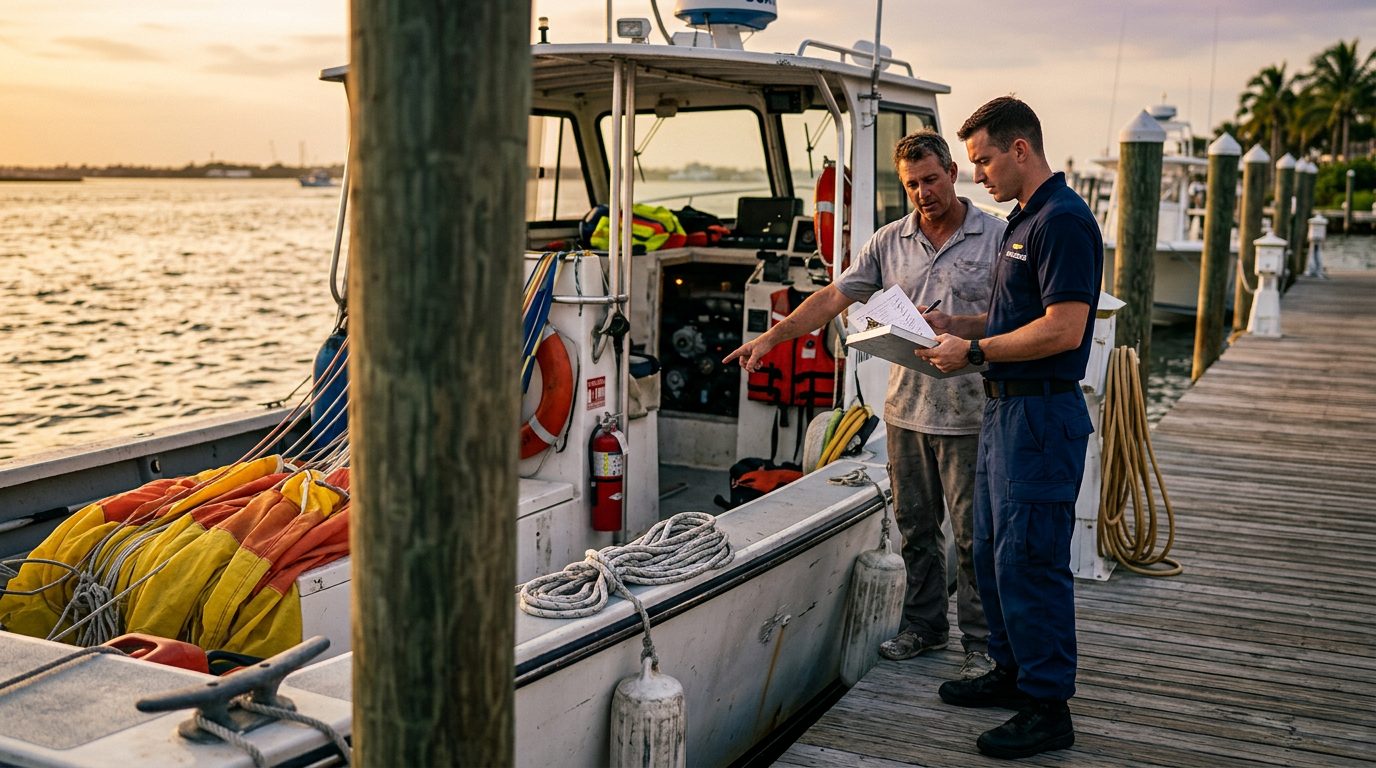
USCG Certifications for Parasail Operators
For passengers, parasailing is a breathtaking view from 500 feet. For the professional on the deck, it's a complex marine operation where safety and com…
For passengers, parasailing is a breathtaking view from 500 feet. For the professional on the deck, it's a complex marine operation where safety and compliance are paramount. Navigating the required USCG certifications for parasail operators is the first and most critical step to launching a successful and legally sound business.
While the thrill of flight sells the tickets, it's the meticulous adherence to federal and industry standards that builds a reputable, long-lasting operation. These credentials aren't just paperwork; they are the bedrock of risk management, professional credibility, and public trust. For any aspiring or current owner in the commercial parasail industry, understanding this regulatory landscape is non-negotiable.
The Cornerstone: The USCG Captain's License
At the heart of all commercial parasail operations is a licensed captain. The United States Coast Guard (USCG) does not issue a "parasail license" specifically. Instead, they require the operator in charge of the vessel to hold a credential appropriate for carrying passengers for hire. For the vast majority of parasail businesses in the U.S., this means obtaining an Operator of Uninspected Passenger Vessels (OUPV) license at a minimum.
OUPV vs. Master License: Choosing the Right Credential
The primary license for most parasail captains is the OUPV, commonly known as a "6-pack," because it allows the holder to carry up to six passengers for hire. A higher-level license is the Master, which allows for more passengers (depending on the vessel's certification) and carries greater authority.
Here’s a breakdown of the key differences relevant to a parasail operation:
| Feature | Operator of Uninspected Passenger Vessels (OUPV) | Master License (e.g., 25/50/100 GRT) |
|---|---|---|
| Common Name | "6-Pack" | "Master Captain" |
| Passenger Limit | Up to 6 passengers for hire. | More than 6 passengers (contingent on the vessel being an inspected passenger vessel). |
| Vessel Size | Vessels up to 100 Gross Register Tons (GRT). | Up to the tonnage specified on the license (e.g., 25, 50, or 100 GRT). |
| Operating Area | Typically "Near Coastal," out to 100 miles offshore. | "Near Coastal" (out to 200 miles) or "Inland," depending on the endorsement. |
| Primary Use | Ideal for standard parasail boats (e.g., CWS Ocean Pro 31') carrying 6 or fewer guests. | Required for larger operations or for captains who also run larger charter or tour boats. |
| Sea Time Req. | Minimum 360 days of documented sea time. | 360 days for Inland, 720 days for Near Coastal (with specifics on tonnage and routes). |
For most new operators, the OUPV is the logical and sufficient starting point. To earn it, you must meet several stringent USCG requirements:
- Documented Sea Time: A total of 360 days of experience on a vessel since age 16. At least 90 of those days must have been within the last three years. One "day" is considered a minimum of four hours on the water.
- Medical Examination: Pass a physical, including vision and hearing tests, documented on a USCG medical form.
- Drug Testing: Be enrolled in a USCG-compliant random drug testing program.
- First Aid/CPR: Hold a current certification from an approved provider like the American Red Cross or American Heart Association.
- TWIC Card: Possess a valid Transportation Worker Identification Credential.
- USCG Examination: Successfully pass a comprehensive exam covering four modules:
- Rules of the Road (International & Inland)
- Deck General & Safety
- Navigation General
- Chart Plotting
Certifying the Vessel: More Than Just a Boat
The captain's license is only half the equation. The vessel itself must meet specific USCG requirements for commercial use. Most parasail boats, like the ubiquitous CWS Ocean Pro 31-foot or 35-foot models powered by a single diesel engine (e.g., a Yanmar or Cummins), operate as Uninspected Passenger Vessels (UPVs).
This "uninspected" designation does not mean unregulated. It means the vessel is not required to have the same level of construction oversight and periodic inspections as a ferry or whale-watching boat carrying dozens of passengers. However, a UPV must still carry specific safety equipment and be in compliance with federal law at all times.
Key vessel requirements include:
- PFDs: One wearable Type I, II, or III PFD for every person aboard, plus at least one throwable Type IV device.
- Fire Extinguishers: USCG-approved marine-type fire extinguishers, with the number and size determined by the vessel's length and construction.
- Visual Distress Signals: Flares, smoke signals, or electronic lights appropriate for day and night use in the operating area.
- Sound Producing Devices: A horn or whistle capable of a four-second blast audible for at least half a nautical mile.
- Stability Letter: Critically important for parasailing, many parasail-specific boats are built with a USCG-accepted stability letter. This document certifies the vessel's stability and safe passenger capacity for its intended use, which is a major factor for insurance and legal compliance.
If an operation intends to carry more than six paying passengers, the vessel must be certified by the USCG as an "inspected" passenger vessel, which involves a far more rigorous and costly process of design approval, construction oversight, and regular inspections.
Parasail-Specific Endorsements and Best Practices
A USCG Captain's License proves you are a competent mariner, but it does not teach you how to safely operate a hydraulic winch, manage a 38-foot parachute in gusty winds, or perform an emergency water landing. This is where industry-specific training and standards from organizations like the Water Sports Industry Association (WSIA) and the Professional Association of Parasail Operators (PAPO) become essential.
While not a federal mandate like a USCG license, completing a recognized parasail safety course is considered a non-negotiable best practice. Insurance carriers often require it, and in states with specific parasail regulations like Florida, it may be legally mandated.
These courses provide the practical, job-specific knowledge that USCG exams lack, including:
- Weather Assessment: Evaluating wind speed, direction, sea state, and approaching fronts.
- Equipment Knowledge: In-depth understanding of the winch system, towline, harnesses, and parachute assembly.
- Line Handling & Inspection: Daily procedures for checking the towline for wear and tear.
- Crew & Passenger Briefings: Standardized safety talks and commands.
- Emergency Procedures: Drills for scenarios like engine failure, winch malfunction, or a towline parting.
Holding a certificate of completion from a WSIA-recognized course demonstrates a commitment to safety that goes beyond the regulatory minimum.
Frequently Asked Questions
Is an OUPV "6-pack" license enough to run a parasail boat?
Yes, for the vast majority of operations. As long as you are carrying six or fewer passengers for hire on an uninspected vessel under 100 GRT, the OUPV license is the appropriate credential for the captain.
What is the difference between USCG regulations and WSIA standards?
The USCG sets the federal laws for maritime operation, focusing on the captain's competency and the vessel's safety equipment (navigation, lifesaving). WSIA develops industry-specific best practices and standards for the act of parasailing itself—equipment use, weather parameters, and emergency procedures unique to the sport. The two are complementary, not mutually exclusive.
How much does it cost to get all the necessary certifications?
Costs can vary, but a new operator should budget between $1,500 and $3,000. This range typically covers the captain's license course and testing fees ($700-$1,200), USCG application and issuance fees (approx. $200), the TWIC card ($125), a physical and drug test ($150-$300), and a parasail-specific safety course ($500+).
Can I get an exemption to carry more than 6 passengers on my boat?
No. The 6-passenger limit for an uninspected vessel is a hard rule. To carry more passengers, the vessel itself must be designed, built, and certified as an inspected passenger vessel by the USCG, which is a complex and expensive undertaking typically reserved for very large, high-volume operations.
Bottom Line
Becoming a certified parasail operator is a multi-layered process that combines federal maritime law with industry-specific training. A valid USCG Captain's License is the mandatory foundation, vessel compliance ensures a safe platform, and specialized training from bodies like the WSIA provides the critical skills for daily flight operations. For professionals in this industry, these certifications are not obstacles; they are the essential components of a safe, credible, and profitable business.
Was this helpful?
Written by
Editorial Team
Related articles
PAPO Certification Explained
For professional parasail operators, ensuring the highest standards of safety and operational excellence isn't just good practice—it's the bedrock of a…
WSIA Certification: Everything You Need to Know
For a professional parasail operator, ensuring passenger safety while managing a profitable business is the ultimate balancing act. Achieving a WSIA cer…
International Parasail Certifications
Expanding your parasail operation beyond US borders presents a thrilling business opportunity, but successfully navigating the complex web…