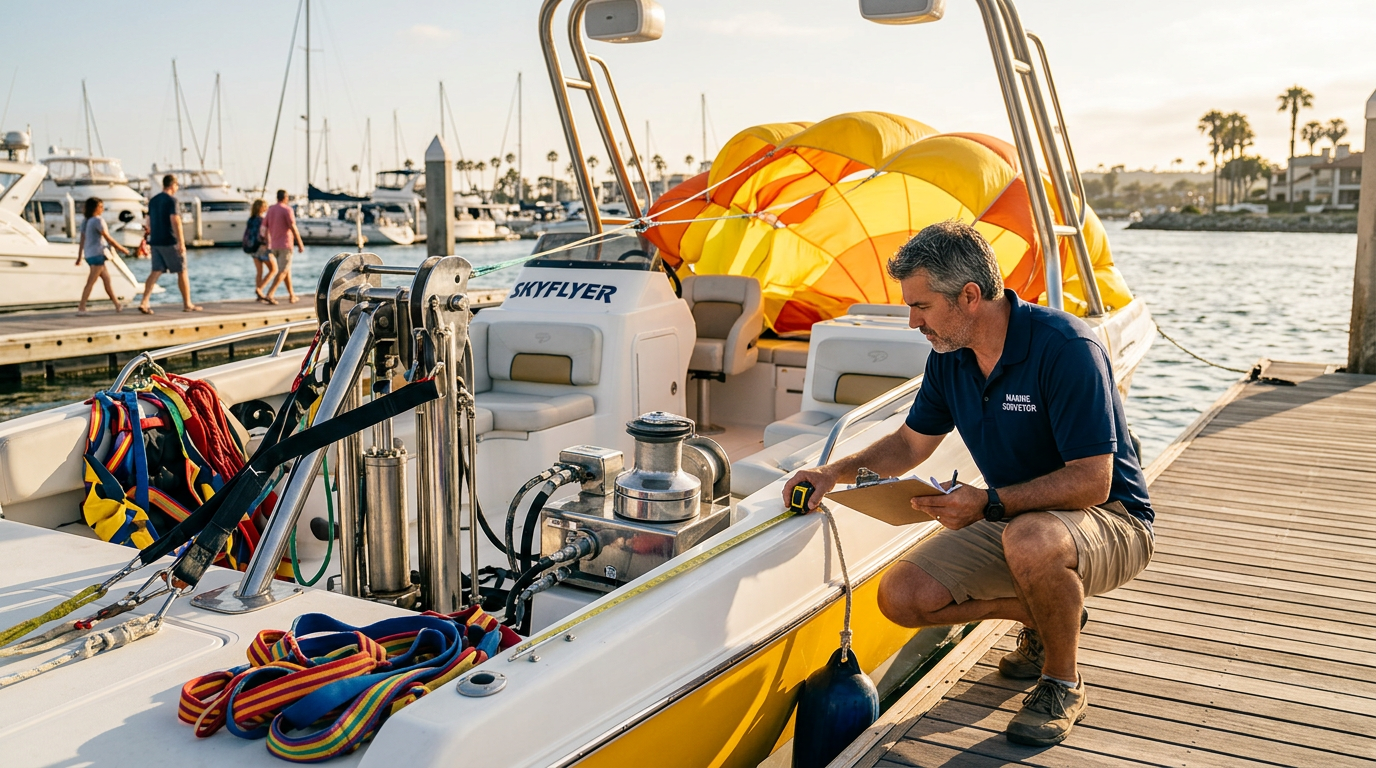
Financing a Commercial Parasail Operation
Launching a successful venture hinges on a solid financial foundation, and this is especially true when it comes to the capitalintensive process of fina…
Launching a successful venture hinges on a solid financial foundation, and this is especially true when it comes to the capital-intensive process of financing a commercial parasail operation. Before your first customer ever straps into a harness, you'll need to navigate the world of marine lending to secure the assets that make your business possible. Understanding what lenders look for and how to present your operation in the best possible light is the first critical step toward getting airborne.
The Scope of Investment: More Than Just a Boat
Newcomers often underestimate the total startup cost. The boat itself is the largest single expense, but it's only one piece of a much larger financial puzzle. A comprehensive budget is the first document a lender will want to see.
A typical startup cost breakdown includes:
- The Vessel: A new, purpose-built parasail boat from a reputable manufacturer like CWS Ocean Pro Marine, Centurion, or Commercial Water Sports is a significant investment, often ranging from $250,000 to over $400,000. These vessels are engineered with integrated winch systems, powerful diesel or dual outboard engines (from Yamaha or Mercury), and USCG Passenger Vessel (UPV) or T-Boat inspection capabilities. While a used boat can reduce the initial outlay to the $100,000 - $200,000 range, lenders will scrutinize its age, engine hours, and survey report much more closely.
- Parasail Equipment: You'll need a quiver of chutes to operate safely in varying wind conditions. Expect to spend $3,500 - $5,000 per chute from brands like Waterbird or Custom Chutes. A typical operation requires at least three sizes (e.g., 34', 38', 42').
- Safety & Flight Gear: This includes harnesses, towlines, impact vests, and a winch system if not integrated. Budget at least $20,000 - $30,000 for a complete, high-quality gear package. Remember, this equipment is subject to wear and requires regular inspection and replacement per WSIA and PAPO standards.
- Insurance: This is a non-negotiable and substantial annual expense. Commercial marine liability and P&I (Protection & Indemnity) coverage for a parasail operation can run from $15,000 to $30,000+ per year, depending on your location, experience, and claims history. Lenders require proof of a binding policy before closing.
- Operational & Administrative Costs: Don't forget dockage/mooring fees, fuel, USCG documentation, state and local business licensing, marketing (website, booking software), and initial working capital to cover expenses before revenue becomes consistent.
The Lender's Point of View
Marine lenders who finance commercial operations are not the same as those financing recreational boats. They are risk managers first and foremost. When they evaluate your application, they are assessing the likelihood of getting their money back from a business asset operating in a seasonal, tourism-dependent industry.
They typically focus on what's known as the "Five C's of Credit":
- Character: Your personal and professional reputation. This includes your personal credit score (ideally 700+), your history in the marine industry, and any relevant certifications (like a USCG Captain's License or WSIA/PAPO certification).
- Capacity: Your ability to repay the loan. This is proven through detailed, realistic financial projections. Lenders want to see a clear path to profitability, with revenue forecasts grounded in your market's tourist traffic, local competition, and proposed pricing.
- Capital: The money you personally invest in the business. A significant down payment, typically 15% to 25% of the total loan amount, demonstrates your commitment and reduces the lender's risk. Having post-closing liquidity or working capital is also crucial.
- Collateral: The boat and equipment being financed. Lenders will order a marine survey on used vessels and will require a first-preferred ship mortgage, giving them the right to repossess and sell the asset if you default.
- Conditions: The terms of the loan and the external economic environment. This includes the loan's purpose, the strength of the local tourism economy, and any competitive pressures in your operating area.
Comparing Financing Pathways
You have several avenues for securing funds. Each has distinct advantages and requirements. Choosing the right one depends on your financial standing, business structure, and timeline.
| Financing Option | Best For | Typical Down Payment | Key Features & Considerations |
|---|---|---|---|
| Traditional Marine Lenders | Operators with strong credit, industry experience, and a solid business plan. Often the fastest route. | 15-25% | These lenders specialize in marine assets. They understand the collateral but are very strict about applicant quality. They expect a detailed business plan and personal financial statements. |
| SBA Loans (7(a) or 504) | Startups or buyers with less capital for a down payment or less direct experience. Good for including working capital. | 10-20% | The Small Business Administration guarantees a portion of the loan, reducing lender risk. This often results in longer terms and lower down payments. The application process is more complex and time-consuming. |
| Seller Financing | Purchasing a turnkey, existing operation from a retiring owner. | Highly Negotiable | Can be an excellent option if the seller is willing. Terms are flexible, and the seller's endorsement acts as a vote of confidence. However, it requires a motivated seller and careful legal review of the agreement. |
| Equipment Finance Agreements (EFAs) | Financing only the boat and primary equipment, separate from other startup costs. | 10-20% | This is similar to a loan but is specific to the "equipment." It can be faster than an SBA loan if you only need to finance the hard assets. Rates may be slightly higher than traditional marine loans. |
Building a Loan-Ready Application
A disorganized application is the fastest way to get a rejection. Your goal is to pre-emptively answer every question a lender might have. Your package should be professional, comprehensive, and polished.
Key Documents for Your Application
- Executive Summary: A one-page overview of your business, the loan request, and why you will be successful.
- Detailed Business Plan: This is the heart of your application. It must include:
- Company Description: Your mission, vision, and legal structure.
- Market Analysis: A deep dive into your location, tourist demographics, and a realistic assessment of your competitors.
- Operations Plan: Details on daily procedures, safety protocols (citing WSIA/PAPO standards), staffing, and USCG compliance.
- Marketing & Sales Strategy: How you will attract customers (online booking, hotel partnerships, social media).
- Financial Projections: Three to five years of projected profit and loss, cash flow statements, and a break-even analysis. Be prepared to defend your assumptions.
- Personal Financial Statement: A complete and honest accounting of your personal assets and liabilities.
- Personal and Professional Resumes: Highlight all marine, management, and business experience for yourself and any key partners. A 100-ton Master Captain's license carries significant weight.
- Cost & Equipment Breakdown: A detailed list of all startup expenses, including quotes from suppliers for the boat and major equipment.
Frequently Asked Questions
Can I finance a used parasail boat?
Yes, absolutely. Lenders will finance used vessels, but they will require a full marine survey from a NAMS or SAMS accredited surveyor. The loan term may be shorter than for a new boat, and the lender will carefully scrutinize the vessel's condition, age, and engine hours before determining its value as collateral.
How much cash do I really need for a down payment?
Plan for a minimum of 15% of the total project cost, but having 20-25% will significantly strengthen your application. For a $300,000 boat, this means having $45,000 to $75,000 in cash for the down payment, plus additional funds for closing costs and initial operating expenses. Lenders want to see that you have "skin in the game."
What's more important: my credit score or my experience?
Both are critical, but in the commercial parasail industry, relevant experience is arguably more important. A lender may be willing to work with a slightly lower credit score if the applicant is a licensed captain with years of experience successfully managing a similar watersports operation. Conversely, a perfect credit score with zero marine experience will face heavy scrutiny.
Does an SBA loan take longer to get approved?
Generally, yes. SBA loans involve two layers of approval: the bank and the SBA itself. The paperwork is more extensive, and the timeline from application to funding can be 60-120 days, compared to 30-60 days for some traditional marine lenders. The trade-off is often more favorable terms, like a lower down payment or longer repayment period.
Bottom Line
Financing a commercial parasail operation is a rigorous process that demands preparation, professionalism, and a comprehensive understanding of your own business. By anticipating the costs, understanding the lender's perspective, and assembling a bulletproof application package, you transform your dream from a high-flying idea into a bankable business proposal. Secure financing is the launchpad for a profitable and safe operation on the water.
Was this helpful?
Written by
Editorial Team
Related articles
Best Parasailing Boats for Beginners in 2025
Selecting your first vessel is the most consequential step in launching a commercial parasailing operation, directly impacting your safety, efficiency,…
Buying Your First Parasail Boat: A 2025 Guide
Taking the helm as an owneroperator after years as a hired captain is a landmark achievement in the commercial watersports industry. The single most imp…
How Much Does a Parasailing Boat Cost? Complete Price Guide
Determining the true parasailing boat cost is the most significant financial calculation for any commercial watersports operator. More than just a vesse…