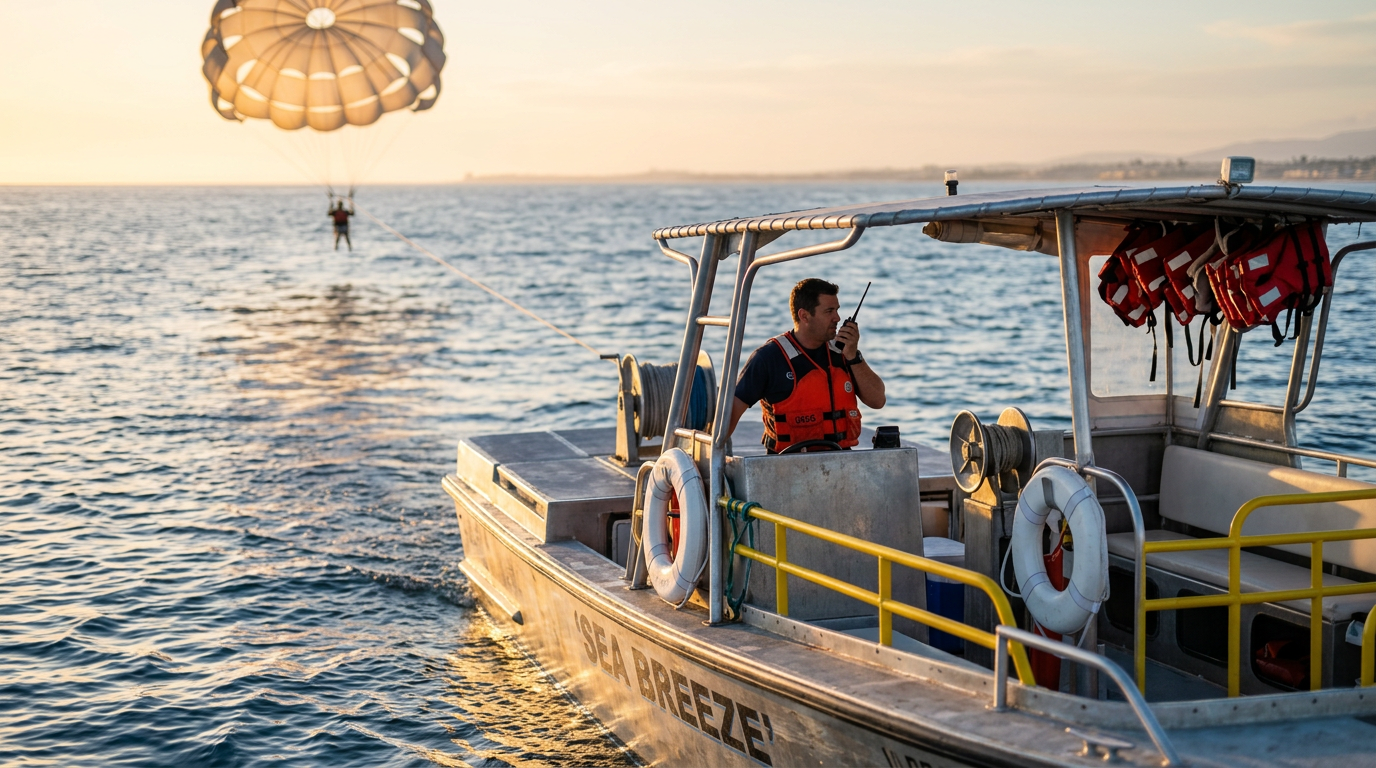
Learning from Past Parasail Incidents
While our industry boasts an impressive safety record overall, a close examination of past parasail incidents reveals a handful of repeating, preventabl…
While our industry boasts an impressive safety record overall, a close examination of past parasail incidents reveals a handful of repeating, preventable patterns. Understanding these common failures isn't just an academic exercise; it's a critical responsibility for every operator committed to passenger safety, regulatory compliance, and long-term business viability. Scrutinizing reports from the National Transportation Safety Board (NTSB) and the U.S. Coast Guard (USCG) shows that catastrophic failures are rarely a surprise, but rather the final, tragic link in a chain of smaller, overlooked issues.
The Anatomy of an Incident
Serious parasail incidents are almost never the result of a single, isolated failure. Instead, they follow a "Swiss cheese" model of accident causation, where multiple layers of defense have holes, and an accident occurs when those holes align. In parasailing, these layers are typically:
- Equipment Condition: The physical integrity of the towline, chute, harness, and vessel equipment.
- Operational Decisions: The judgment calls made by the captain and crew before and during the flight.
- Environmental Factors: Primarily wind and weather, which act as a powerful catalyst on any existing weakness.
When an operator neglects equipment maintenance, makes a poor judgment call on the weather, and then a sudden gust hits, the holes align. The key to prevention is ensuring each of these defensive layers is as solid as possible.
Equipment Failure: The Weakest Link
Physical equipment is the most common and tangible point of failure cited in incident reports. Neglect in this area is unforgivable because it is almost entirely within the operator's control.
The Towline
The towline is the single most critical piece of safety equipment and the most frequent component to fail. A line parting under load is the primary cause of nearly all high-profile parasail tragedies. Common causes of line failure include:
- UV and Saltwater Degradation: Lines left in the sun and constantly exposed to salt water lose strength over time, even if they appear visually sound.
- Internal Wear and Chafe: A line can look fine on the outside but be significantly weakened from internal friction or from rubbing against a poorly maintained fairlead or winch level-wind.
- Exceeding Service Life: All towlines have a finite lifespan recommended by the manufacturer and a "best practice" ceiling established by the Water Sports Industry Association (WSIA). Many operators fail to track flights and hours on a line, using it far beyond its safe service limit. A line that has performed 600 flights is not the same as a new one.
A high-quality, 4,500-lb test towline might cost between $300 and $500. Trying to save money by extending its life by a few weeks is a risk with an unacceptably high cost. Meticulous flight logging for each line is not optional; it's essential.
Harnesses, Risers, and Canopies
While less common than line failure, harness and support strap failures are devastating. Similar to towlines, the enemy is UV degradation breaking down the stitching and webbing. Pre-flight checks must involve more than a glance. Crew should physically pull on stitching, inspect buckles for cracks, and check webbing for discoloration or fraying. Any harness showing significant wear must be immediately removed from service. The canopy itself requires similar inspection for tears, weakened suspension lines, and worn attachment points.
The Vessel and Winch System
The parasail boat itself is a key part of the safety system. A well-maintained winch is critical for smooth, controlled deployment and retrieval. Hydraulic fluid leaks, worn winch drum components, or a malfunctioning level-wind can introduce shocks or chafe to the towline, hastening its failure. Vessels from builders like Centurion or Ocean Pro Marine are designed for this purpose, but their specialized equipment requires a rigorous maintenance schedule. The engine, whether a powerful single diesel or twin outboards from Yamaha or Mercury, must be in peak condition to maneuver effectively in changing seas or during an emergency recovery.
Operational Errors and Decision-Making
A perfect set of gear is useless in the hands of an untrained or complacent crew. Operational errors are a major contributing factor in incidents where the equipment was technically sound but used improperly.
The most critical decision any captain makes is the "go/no-go" call based on weather. The financial pressure to fly is real, but it cannot override safety protocols. Incident reports are filled with statements about "dark clouds on the horizon" or winds that felt "a little too gusty." This highlights a culture of risk acceptance that must be eliminated.
Proper crew training in emergency procedures is another common gap. What is the plan if a line parts? How is the downed flyer recovered from the water? Does the crew practice these "man overboard" drills regularly? A flustered, untrained crew can turn a manageable situation into a disaster.
Weather: The Great Unifier
Weather is the variable that connects equipment weakness and poor decision-making. A degraded towline might hold in 15 mph winds but will snap instantly in a 25 mph gust.
Captains must not only know the current wind speed but also understand the implications of the forecast. Key dangers include:
- Gust Factor: A forecast of 15 mph winds with gusts to 25 mph is a major red flag. The gear and passenger experience is dictated by the gust, not the average.
- Approaching Fronts: A distant thunderstorm can create dangerous outflow boundaries and gust fronts miles ahead of the actual rain. Ceasing operations must happen long before the storm is "on top of you."
- Offshore Development: On hot, humid days, storms can pop up offshore with little warning. Constant visual scanning of the entire horizon is more reliable than any single weather app on a phone.
Common Failure Points & Mitigation Strategies
| Failure Point | Common Underlying Cause | Best Practice Mitigation |
|---|---|---|
| Towline Parting | UV degradation, chafe, exceeding service life. Often coupled with high winds. | Daily visual and tactile inspection. Strict flight logging and replacement per WSIA guidelines (e.g., 500 flights/90 days). |
| Harness Failure | Worn stitching, UV-rotted webbing, cracked buckles. | Meticulous pre-flight inspection of every component. Store gear out of the sun. Remove from service at first sign of wear. |
| Loss of Control | Flying in wind speeds exceeding operational limits (sustained >20 mph or high gusts). | Strict adherence to company wind speed limits. Cease operations well in advance of approaching bad weather. |
| Winch Malfunction | Poor hydraulic maintenance, frayed winch cable creating chafe on towline. | Adhere to a documented, preventative maintenance schedule for the entire winch system, including fluids, fittings, and drum. |
| Delayed Recovery | Crew indecision or lack of training following an in-water incident. | Regular, documented emergency drill practice for all crew members (line separation, flyer recovery, etc.). |
The Role of Regulation and Certification
The regulatory environment for parasailing in the US is a patchwork. The USCG has authority over the vessel and the captain's license (e.g., a Master license for vessels carrying more than 6 passengers). However, there are few federal regulations governing the parasailing equipment itself.
In the wake of high-profile incidents, states like Florida have stepped in. The White-Miskell Act in Florida mandates specific operational standards, including prohibiting operations in sustained winds over 20 mph, requiring a weather radio, and setting minimum insurance levels.
This is where industry organizations like the WSIA and the Professional Association of Parasail Operators (PAPO) play a vital role. They offer training, certifications, and operational standards that often exceed state or federal minimums. Adherence to these voluntary standards is a hallmark of a professional, safety-conscious operation.
Frequently Asked Questions
What is the single most common cause of serious parasail incidents?
Towline failure is the most frequent mechanical cause. However, this failure is almost always linked to a combination of contributing factors, including operating in excessively high winds and using a line that is old, worn, or improperly maintained.
Are there federal laws that dictate how often parasail equipment must be replaced?
No, there are no specific federal laws mandating a replacement schedule for canopies, harnesses, or towlines. The USCG regulates the vessel and crew, but equipment standards are primarily driven by manufacturers and industry best practices, such as those promoted by the WSIA. Some states, notably Florida, have enacted their own specific parasailing safety laws.
How often should a parasail towline be replaced?
While manufacturer guidelines vary, a widely accepted industry best practice is to replace the line every 90 days of use or after 500 flights, whichever comes first. The most professional operators maintain a detailed log for every line to track its usage precisely.
What is the maximum safe wind speed for parasailing?
Most professional operators and the Florida state law set the limit at a sustained wind speed of 20 mph. Critically, operations should also cease if gusts are significantly higher than the sustained wind speed (e.g., more than 5 mph over). The final decision always rests with the licensed captain's judgment.
Bottom Line
The history of parasail incidents is written with repeating themes: old ropes, bad weather, and poor judgment. Safety is not a passive state; it is an active, daily commitment. It is inspecting a harness for the 500th time with the same diligence as the first, logging every flight on a towline, and having the discipline to cancel a day's flights and sacrifice revenue for safety. Learning from the mistakes of the past is the only way to protect our customers, our crews, and the future of our industry.
Was this helpful?
Written by
Editorial Team
Related articles
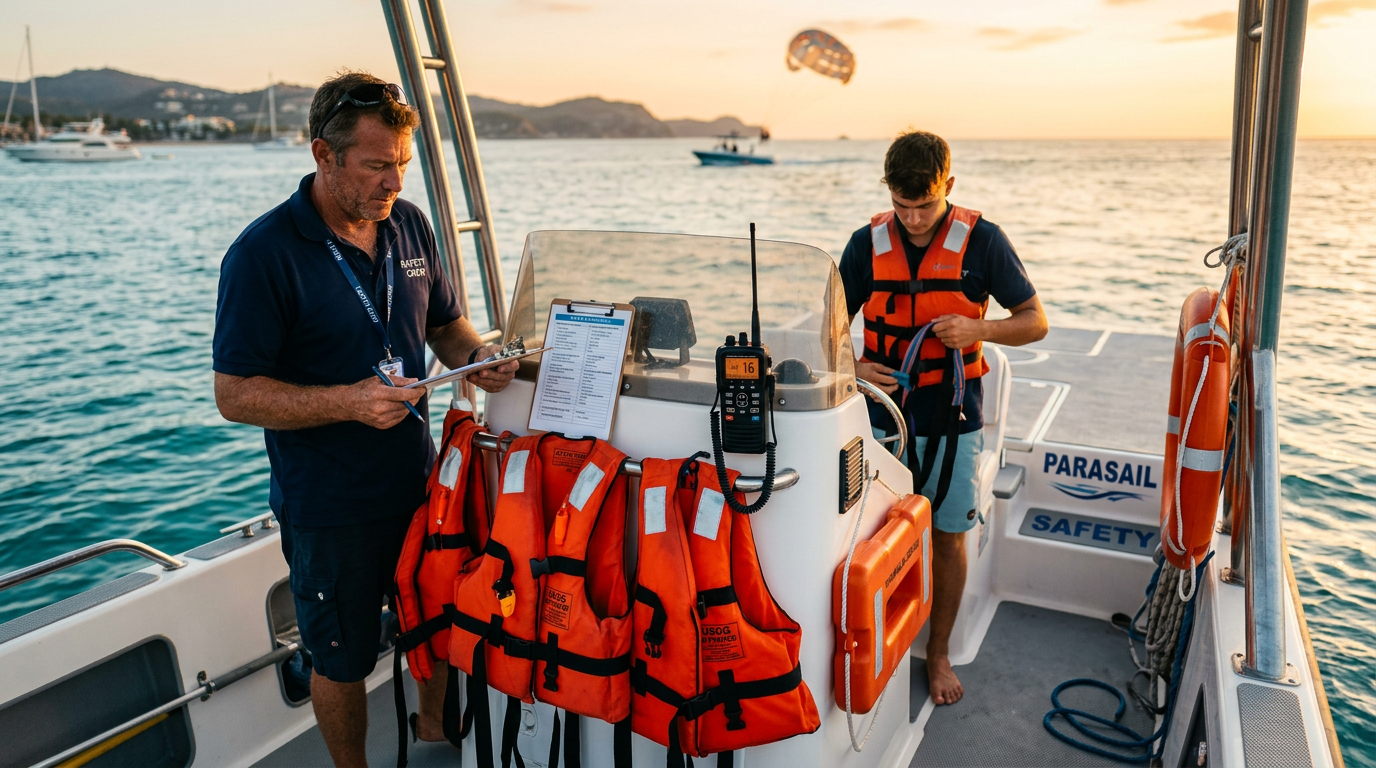
The Pre-Flight Safety Checklist Every Operator Needs
In the highstakes world of commercial parasailing, where customer thrills and operational risks are two sides of the same coin, a rigorous preflight saf…
Weather Decision-Making for Parasail Operators
Of all the calculations a parasail captain makes in a day, none is more critical than the constant evaluation of the sky and sea. The most successful an…

Parasailing Safety Equipment Checklist (Complete Guide)
The definitive parasailing safety equipment checklist every captain should run before each flight day.